

Method / AI timelapse & transformation films
A real paddy-field season transformed into a continuous cinematic day — through long-duration capture, deterministic light placement, constrained AI relighting and LTX video interpolation.
Project summary
The result is a single visual day that stands in for an entire crop cycle.
The Tilda project began with a real paddy field recorded across the rice-growing season using a long-duration timelapse camera. The final film was not made as a simple chronological export. It was built as a controlled reconstruction of time: selected stitched panoramas, manually governed sun and moon placement, constrained AI relighting and LTX video interpolation.
The field is real. The capture is real. AI is used for continuity, relighting, interpolation and transformation — not to invent the landscape.
The problem
Agricultural change happens slowly. A rice field transforms over months, not seconds. A raw timelapse can show this transformation, but it often carries visual instability: clouds jump, light changes abruptly, exposure shifts, field colour flickers, and missing stages interrupt the continuity.
For this project, the challenge was precise: keep the field real while making the transformation cinematic and legible.
The workflow
Each stage constrains the next. Once the stitched frame geometry is locked, every later decision — sun, moon, prompt, interpolation — is tied to that fixed coordinate base.
Source capture
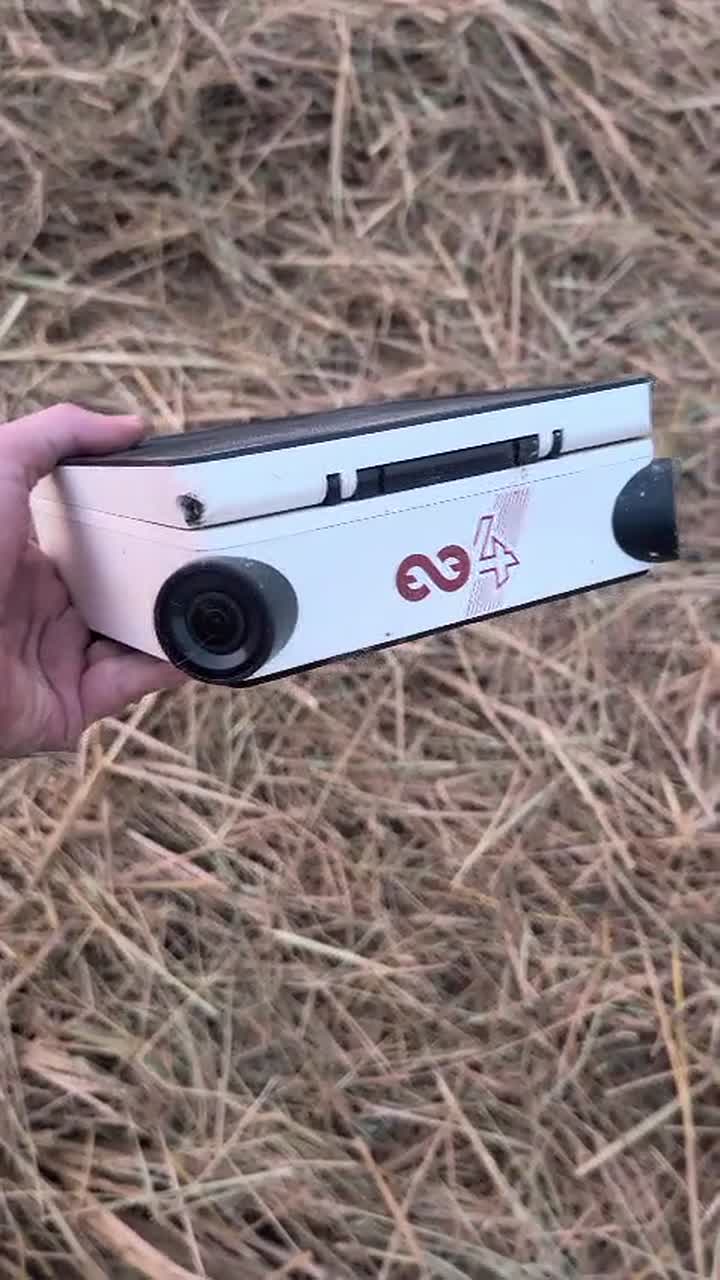
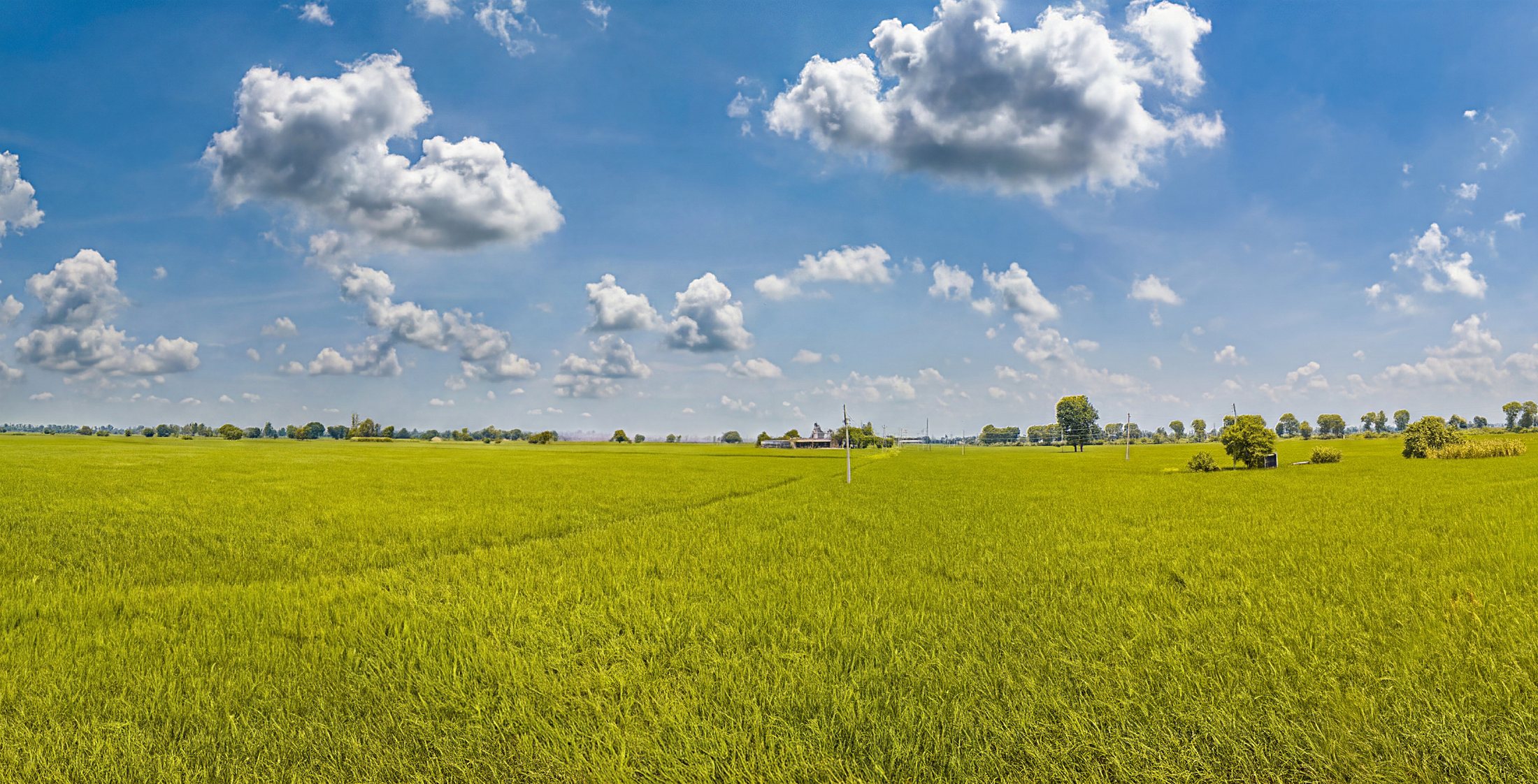
The source material came from a fixed Enlaps Tikee 4 installed in the paddy field. It recorded roughly every hour through daylight across the rice-growing season, producing left and right panoramic captures that were later stitched into working frames.
The field remained the base truth of the project. Every later AI process depended on this real photographic foundation.
Stitching & programming
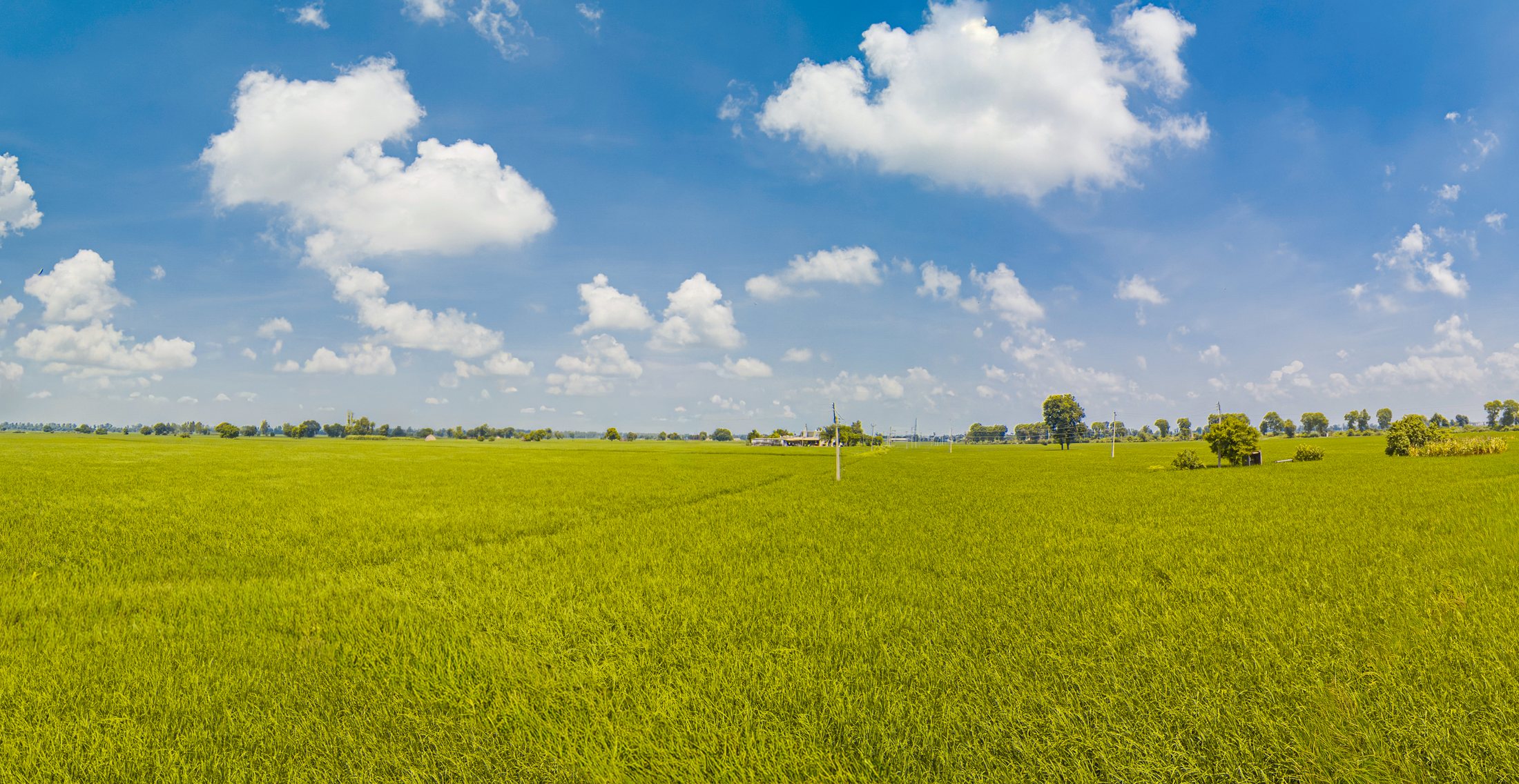
The left and right Tikee captures were exported, stitched in Hugin, and batch-processed through a Python-assisted workflow. Once the crop and final dimensions were locked, the frame became the coordinate base for the entire project.
After this stage the image could not be casually recropped — doing so would break the relationship between the placed sun, moon and final frame.
Frame selection
The film was built from selected keyframes. The selection followed a diagonal path through the season: early dates paired with morning light, mid-season frames with stronger daylight, later stages with evening and dusk.
This let one visual day stand in for the full rice-growing season. The selection was not only technical — it was editorial.
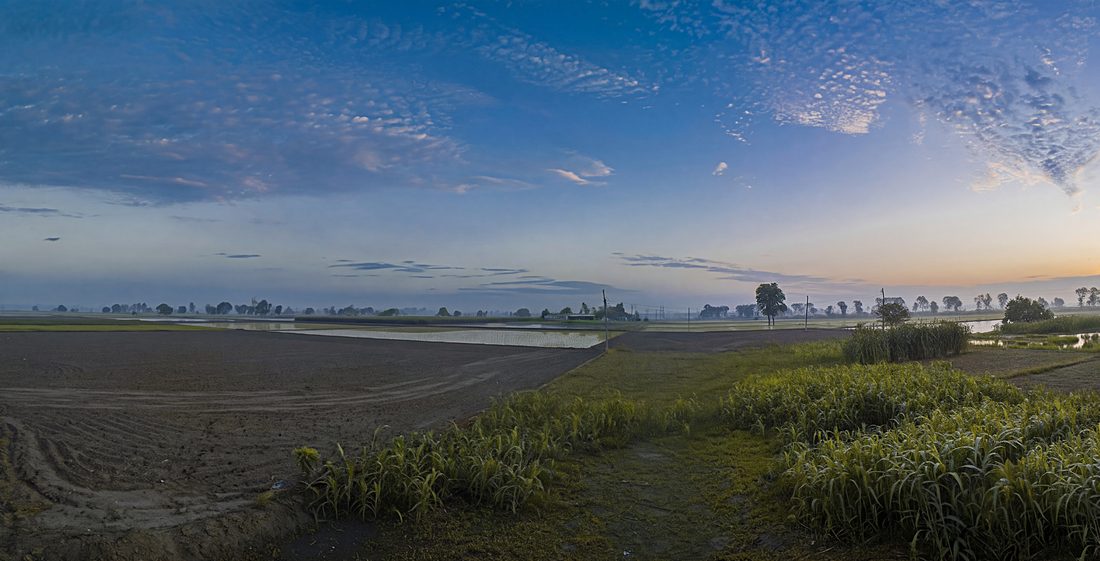 01 · Morning
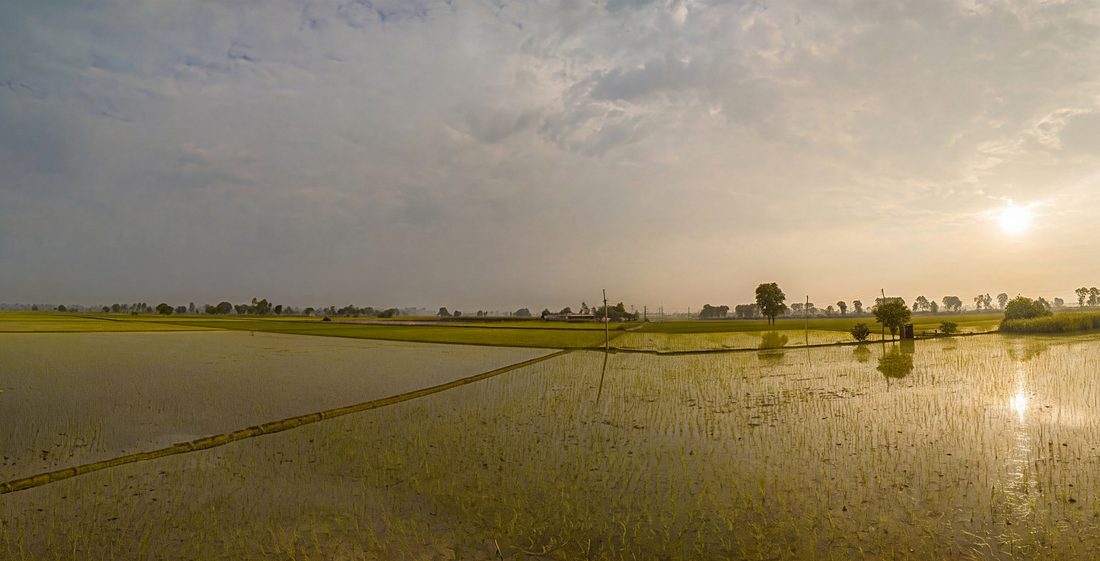 05 · Early growth
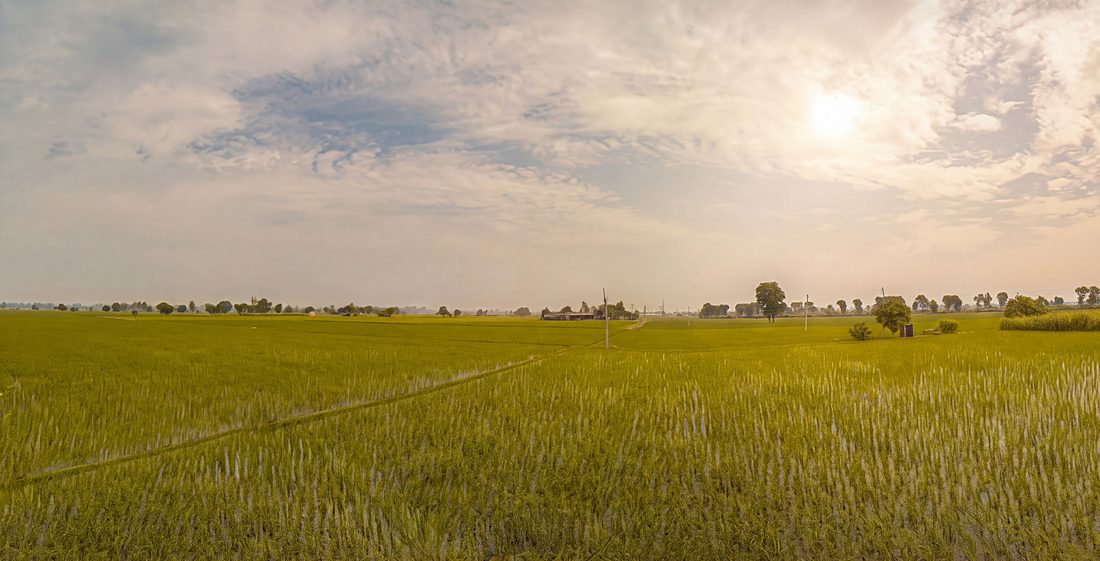 09 · Green crop
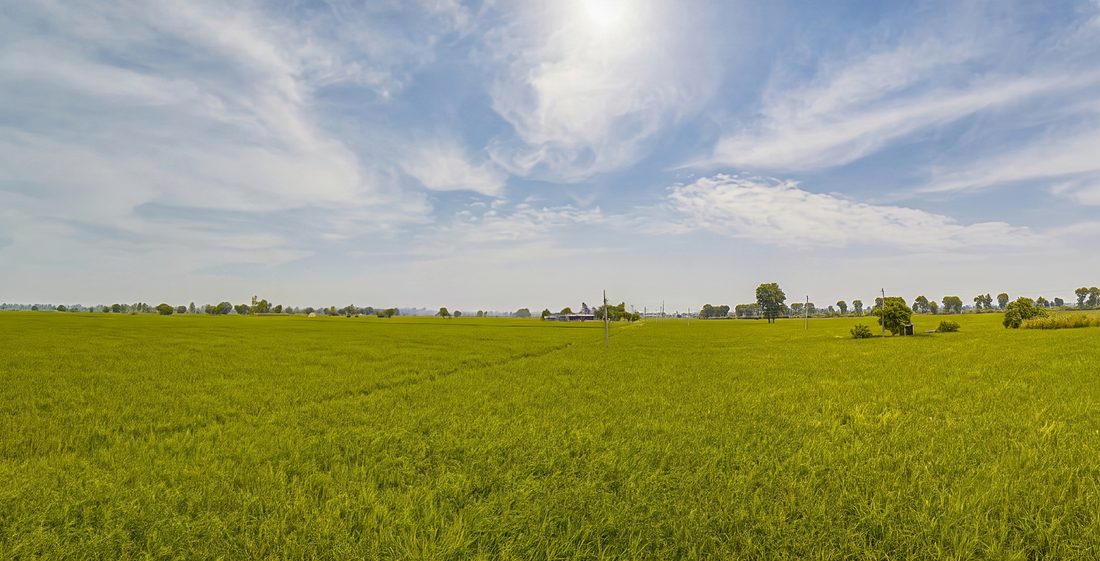 13 · Midday
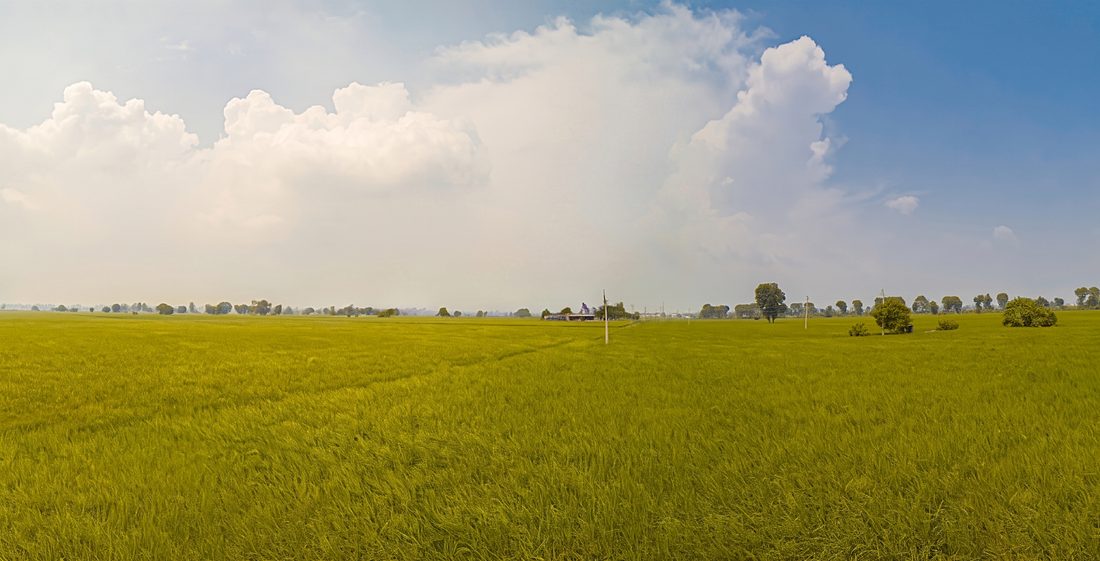 17 · Ripening
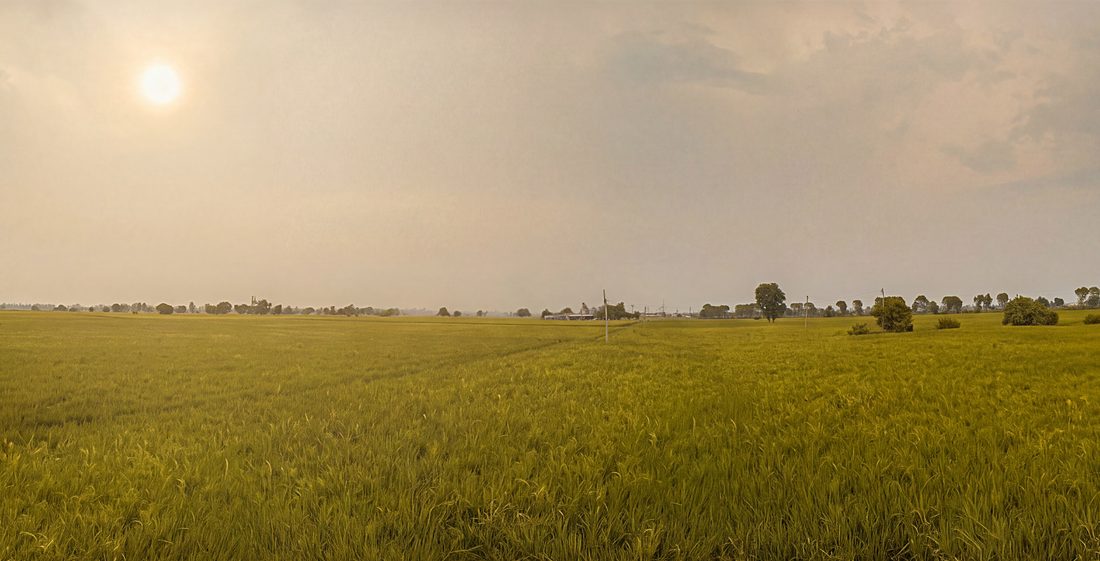 21 · Golden
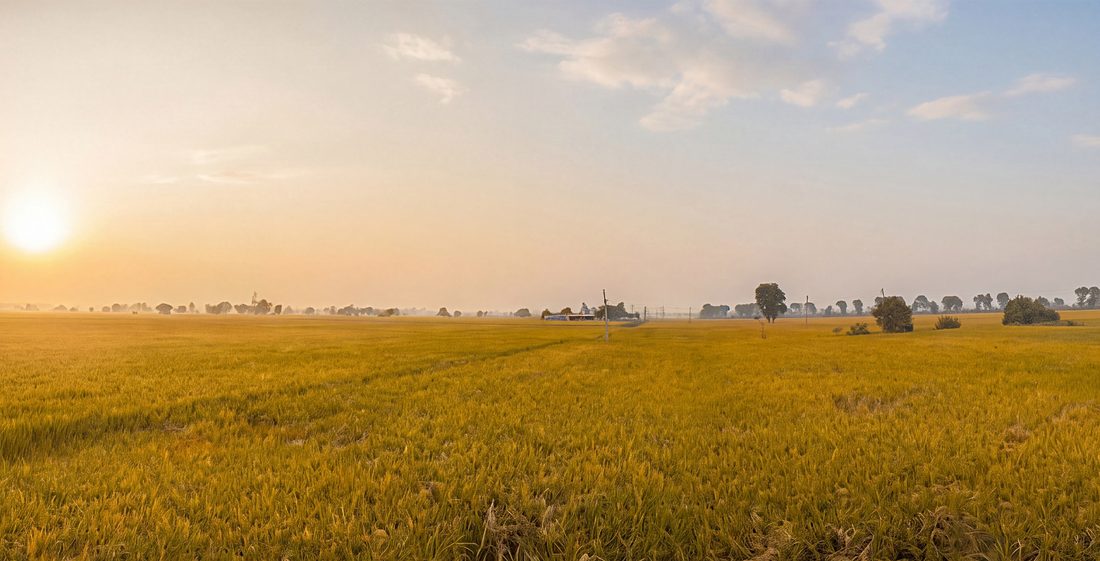 25 · Dusk
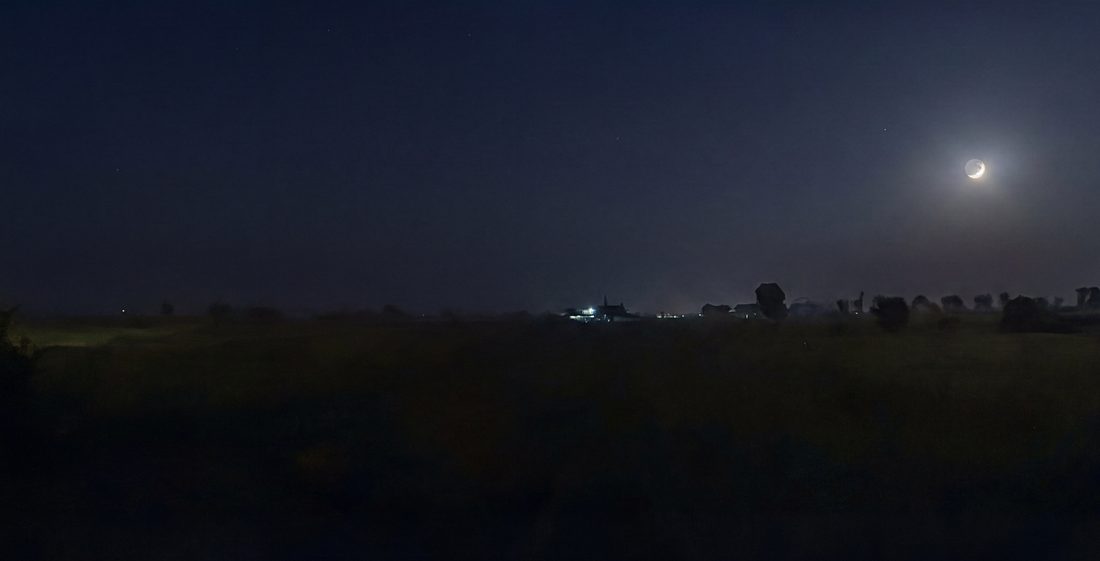 29 · Night
Sun & moon control
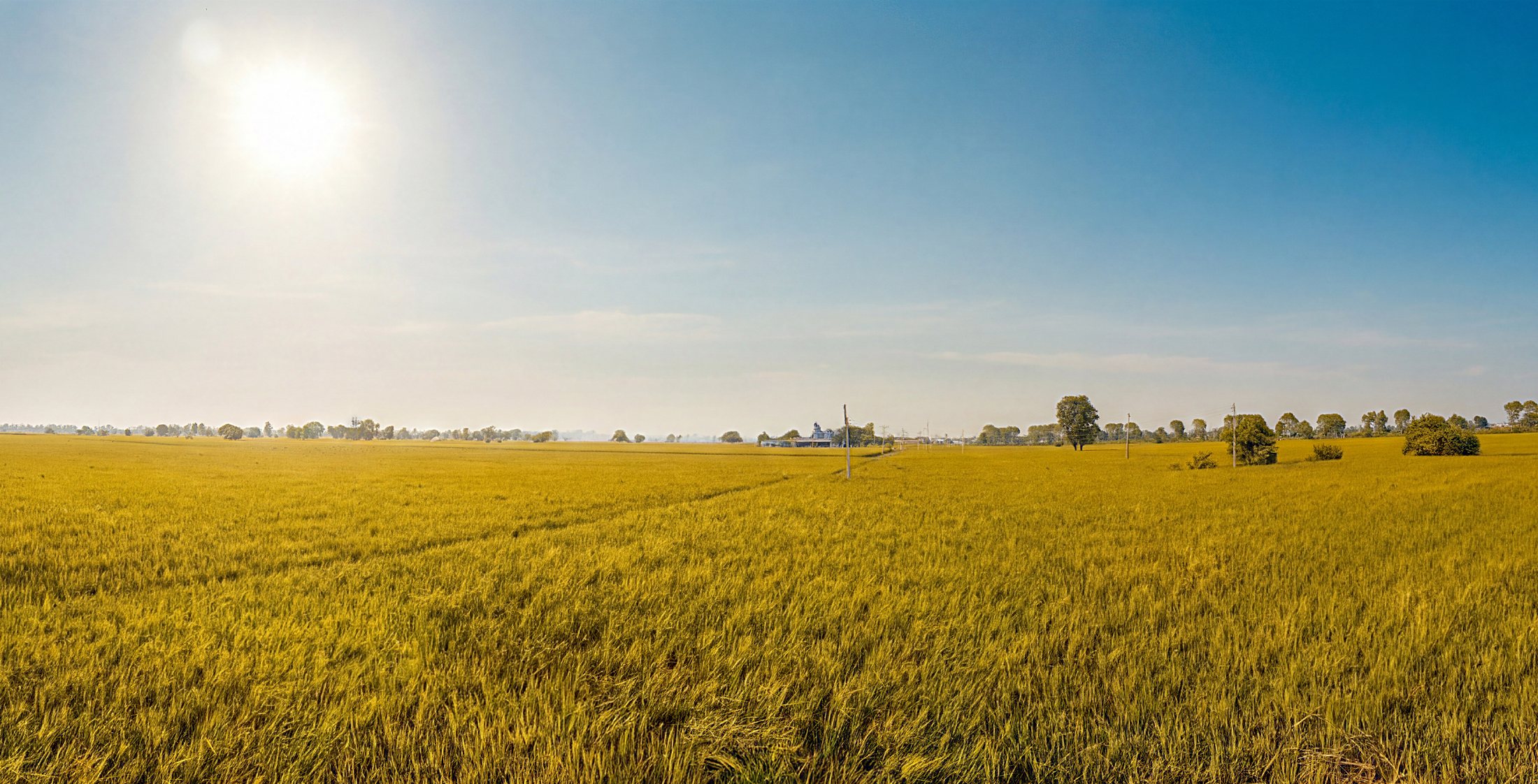
The sun and moon were not left for the model to invent. They were placed manually and deterministically — adjusted in Photoshop for realism, including opacity shifts with cloud cover — and then fixed. The AI relighting stage was instructed to preserve their exact position and only harmonise the scene around them.
This kept light direction intentional and prevented the model from redesigning the sky. Drag to compare.
Relighting & sky reconstruction
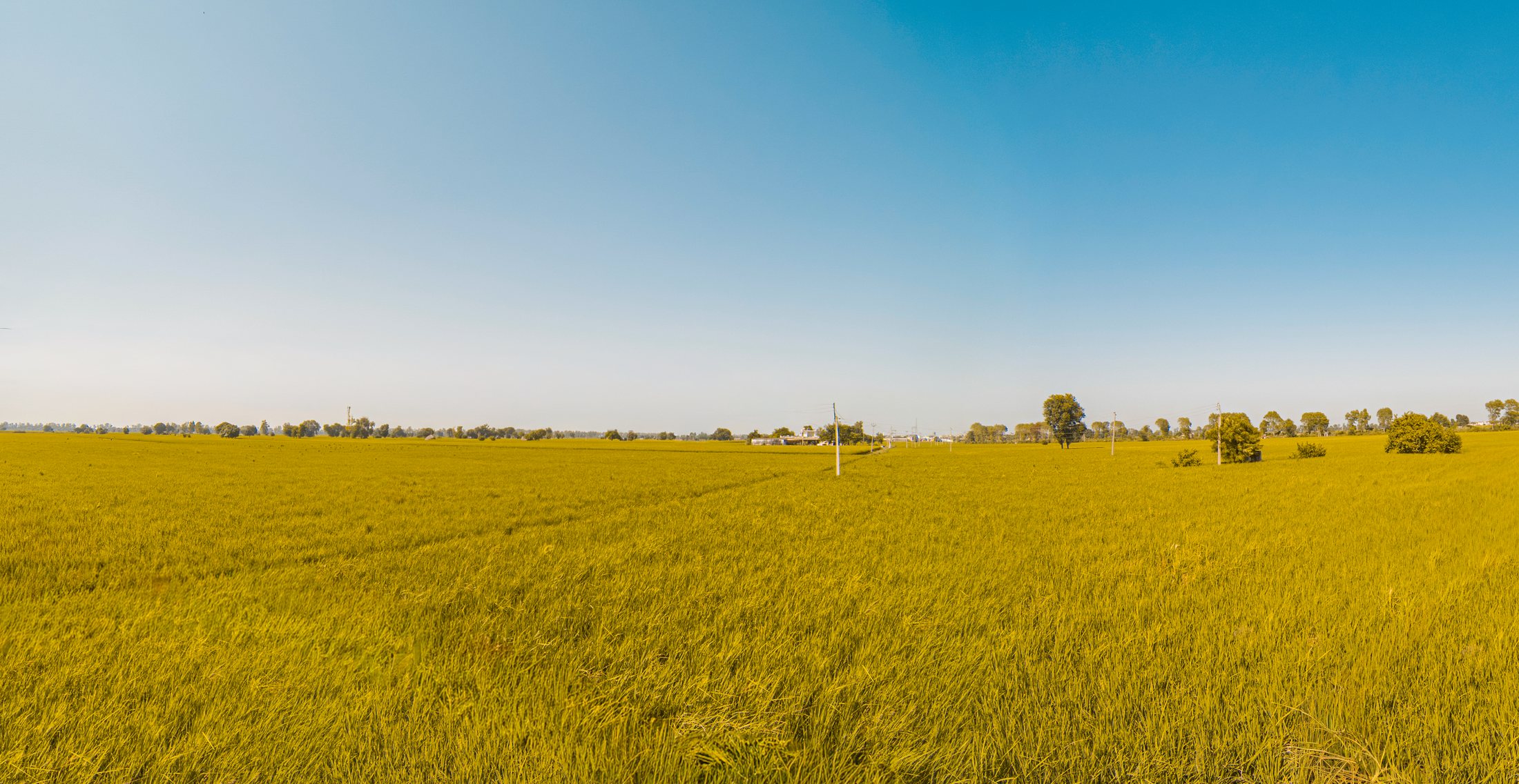
The relighting stage was designed to be narrow. The model had to preserve the field, horizon, poles, shrubs, crop structure, framing and sun position. It could improve atmosphere, haze, cloud depth and light integration — but it could not repaint the scene.
Broad prompt language caused drift: moved suns, repainted fields, oversized skies. The working prompts became technical and constrained. Drag to compare the constrained relight.
LTX 2.3 interpolation
The selected frames were interpolated with LTX 2.3 inside ComfyUI. LTX was not used to invent a field from text — it interpolated motion and transformation between real photographic states. Rather than one long unstable film, the sequence was divided into seven overlapping windows of five keyframes each, with one repeated handoff frame shared between consecutive windows.
Low-resolution motion generation. 11 steps, CFG 1.8 — establishes movement.
LTX 2.3 spatial latent upscale. 7 steps, CFG 1.8 — adds spatial detail.
Second latent upscale. 6 steps, CFG 1.8 — resolves the final detailed output.
The continuity challenge
The hard part was not making a single short AI clip. It was making several generated clips behave as one continuous film. A segment could look convincing alone and still fail when joined to the next: clouds changing direction, sky texture shifting, haze and luminance jumping, field colour flickering, growth discontinuity.
The workflow solved this through locked keyframes, fixed light placement, restrained sky reconstruction, repeated overlap frames, multi-pass generation and manual assembly. The duplicated handoff frames were used during generation, then trimmed at the joins.
Final result
The final film compresses the rice-growing season into a 75-second visual arc — morning, growth, drying, ripening, harvest, dusk and a night coda. Roughly 70 seconds of daylight and dusk, with a 5-second night close, and a date counter to keep the agricultural timeline legible.
The result is neither a raw timelapse nor a fully generated video. It is a hybrid transformation film built from real capture and controlled AI reconstruction.
Applications
AI Timelapse sits between documentation and construction. It does not abandon the photographic source, but it also does not accept raw capture as the final form. It treats time as material — selected, governed, interpolated and shaped until transformation becomes visible.
Work with us
If you have a real season, site or process recorded over time, we can build a controlled transformation film from it — preserving the photographic truth while making the change legible.
Start a project See more work