Commercial work / Case study
A studio method for rebuilding damaged or incomplete photographs into stable visual references and historically coherent photographic outputs.
Developed through a project delivered for the Akbar Padamsee Foundation for exhibition and book use, this work combines source-anchored reconstruction, deterministic pixel work, controlled generative recovery and photographic calibration.
With thanks to Bhanumati Padamsee, wife of the late Akbar Padamsee, for her help and support.
Premise
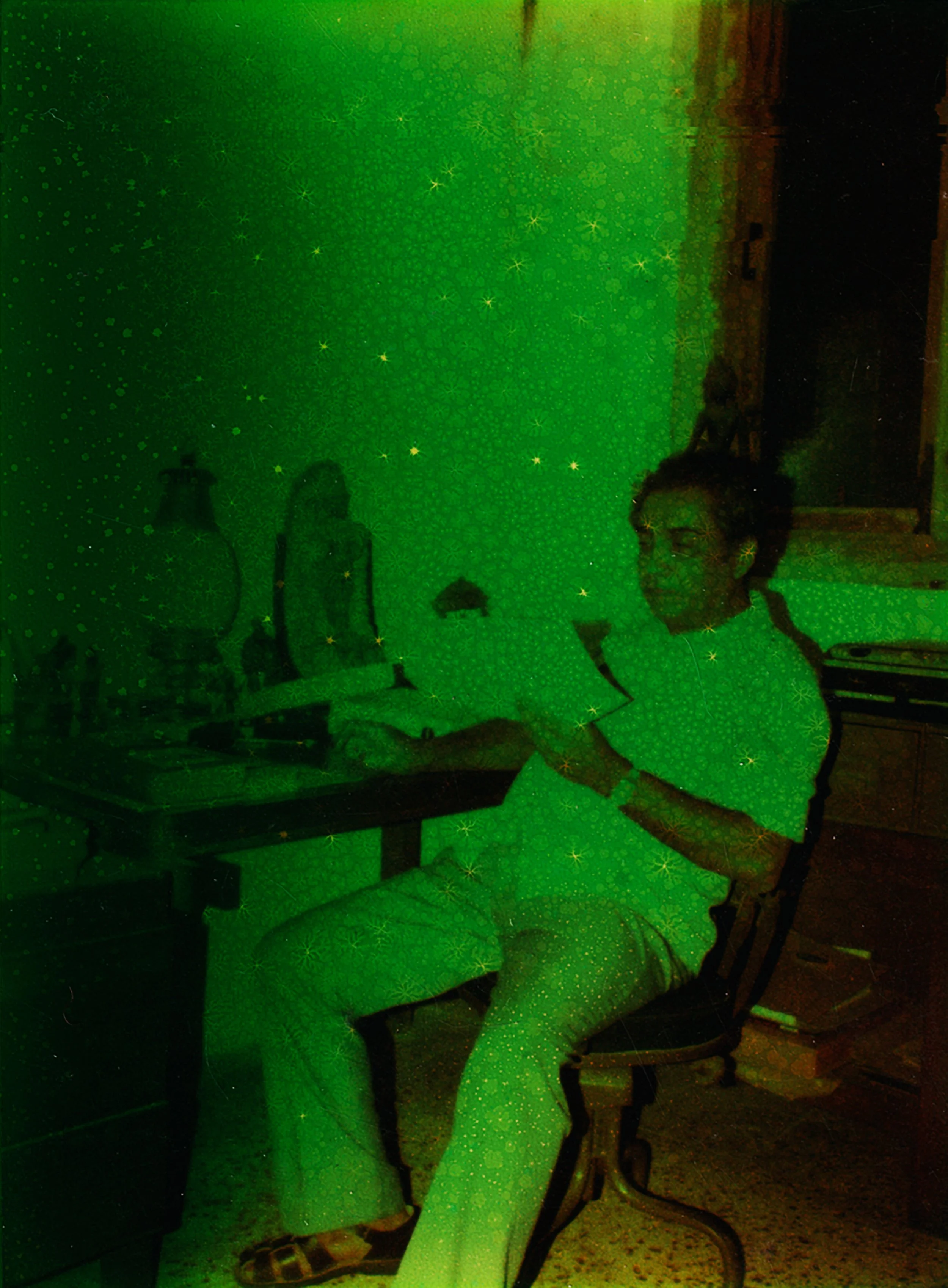
Some photographs survive only as damaged records. In many archives the print remains, but the negative is lost and no new darkroom print can be made. That surviving print becomes the last photographic witness.
We do not replace it with a newly generated image. We work from the surviving image itself, keeping composition, placement and visual structure anchored while reconstructing what fading, damage or missing information has made illegible.
Positioning
Generic AI restoration can produce a plausible new image quickly. For archival work, plausibility alone is not enough.
Our process combines controlled generative reconstruction with deterministic image work. The source photograph remains the anchor throughout. Pixel-level repair, masking, frequency separation, tonal correction, structure-preserving edits and manual retouching retain the surviving image while rebuilding legibility.
Generative steps are introduced only where information is damaged, missing or no longer legible, or where the image requires controlled relighting, colour recovery or recolouring under evidence.
The reconstruction is kept from drifting freely. Shape, placement, proportions and known details remain tied to the source record.
A second layer of control concerns historical coherence. Recovered colours, objects, materials and lighting are checked against documentary evidence, period context and associated images.
A third layer concerns photographic coherence. Once a stable reference image exists, the output can be calibrated back into a historically coherent photographic chain through grain, tonal compression, print behaviour, film response and other period-sensitive characteristics. This allows the reconstructed image to return to the archive not as a generic AI image, but as a photograph consistent with its time, medium and corpus.
Process
The surviving photograph remains the anchor. Composition, placement and internal structure stay fixed.
Pixel-level repair, masking, tonal balancing, frequency separation and manual correction rebuild legibility without replacing the source image.
Generative reconstruction is introduced only where information is damaged, missing or illegible, or where controlled relighting and recolouring are required under evidence.
The restored image can then be brought back into a historically coherent photographic output state through grain, tonal compression, paper behaviour, film response and print logic.
Case study 01
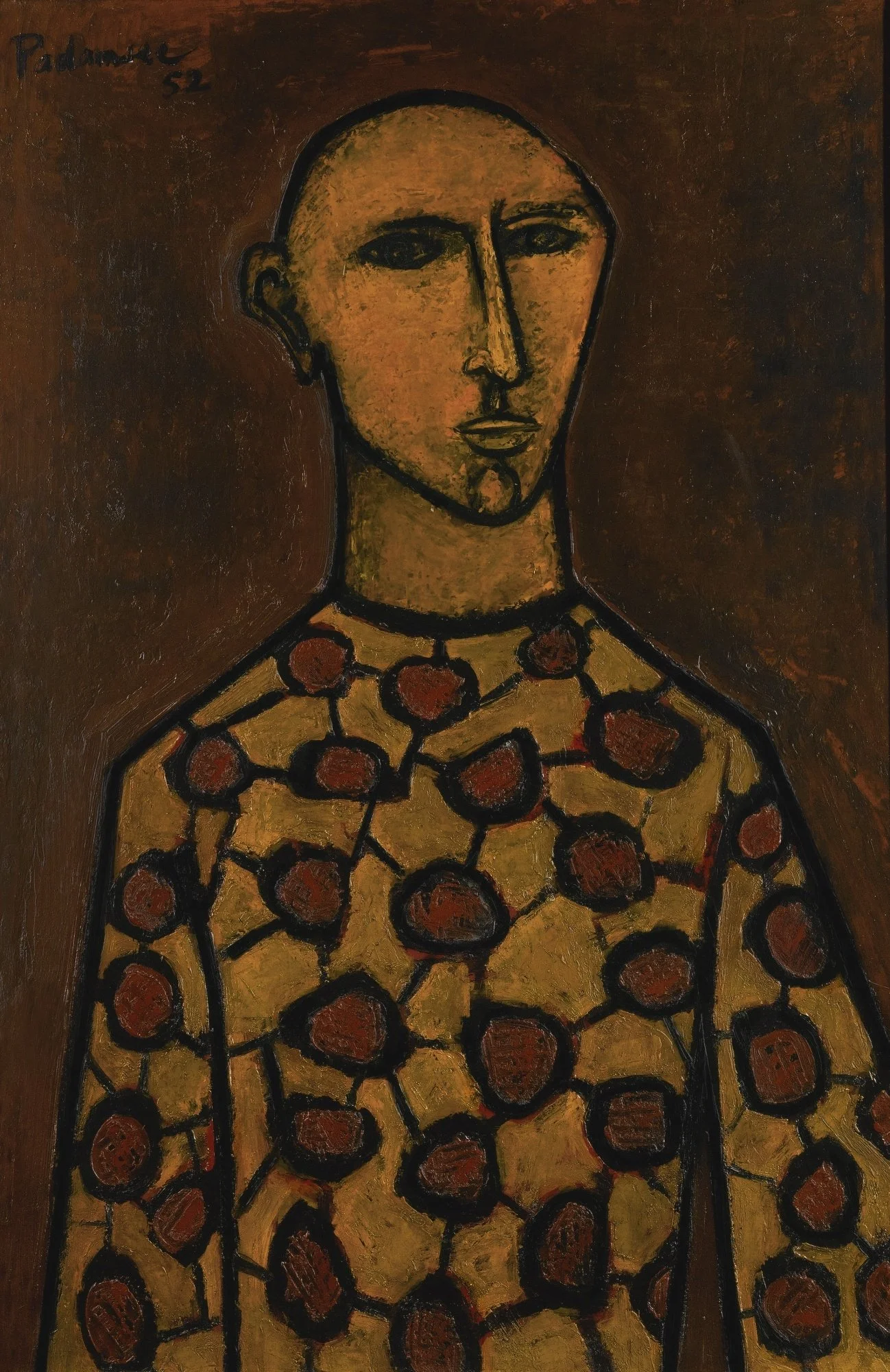
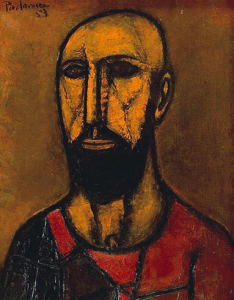
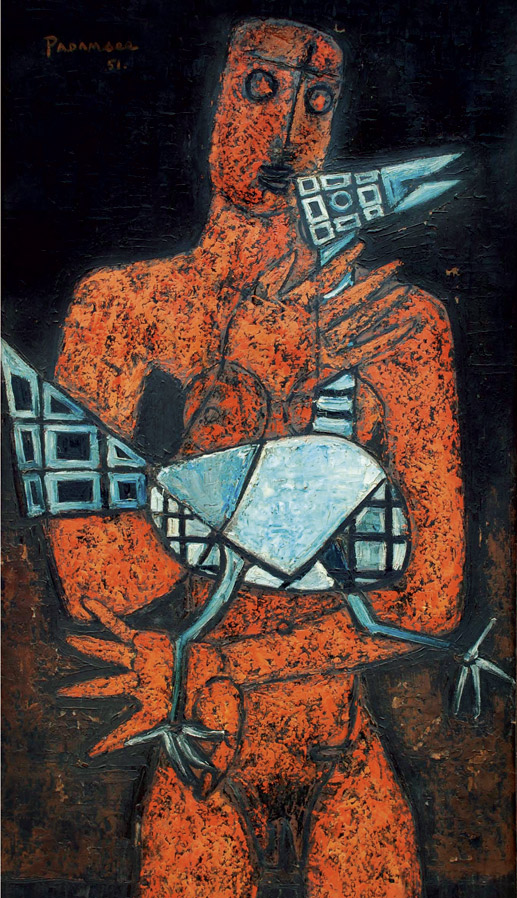
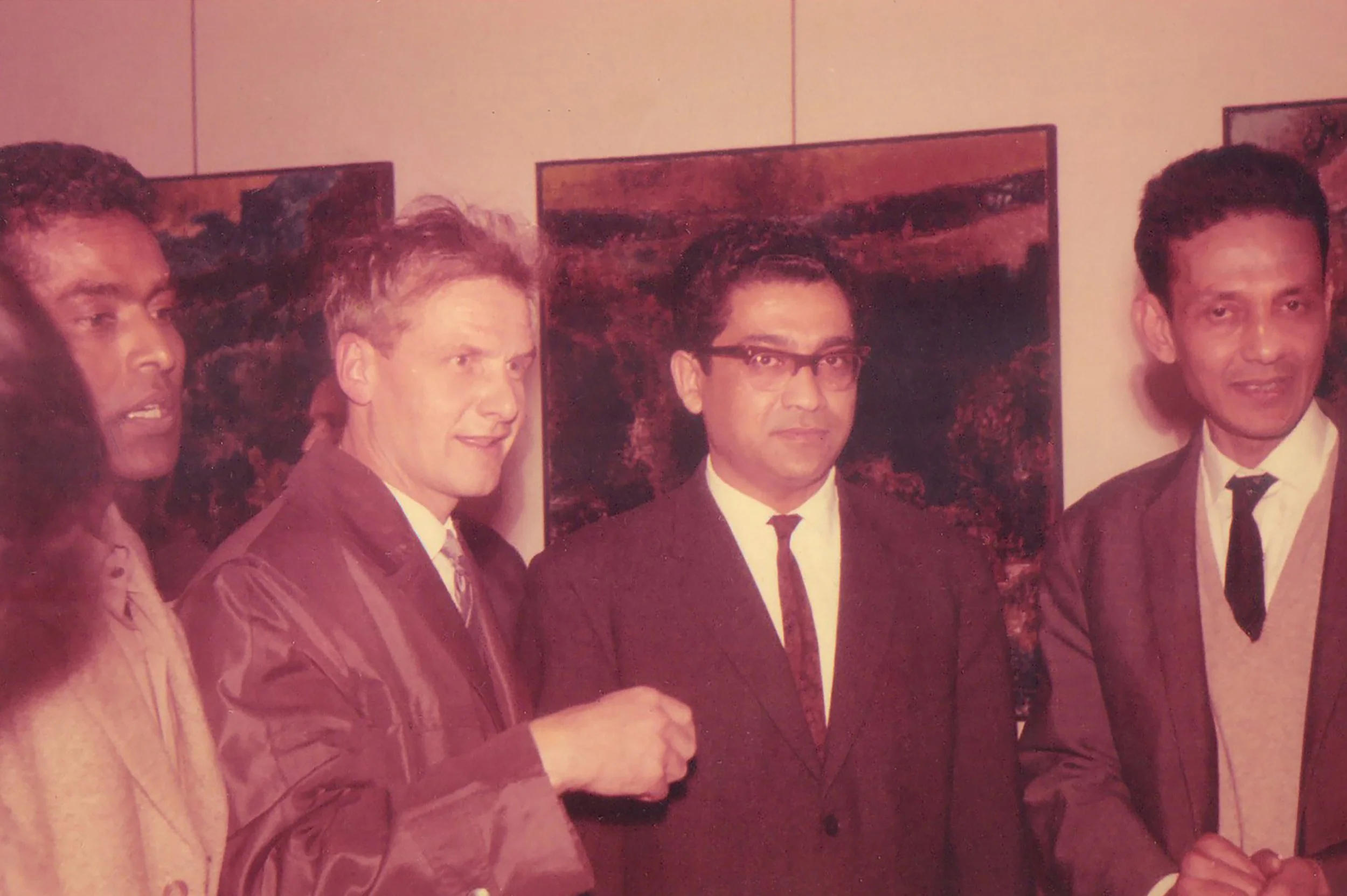
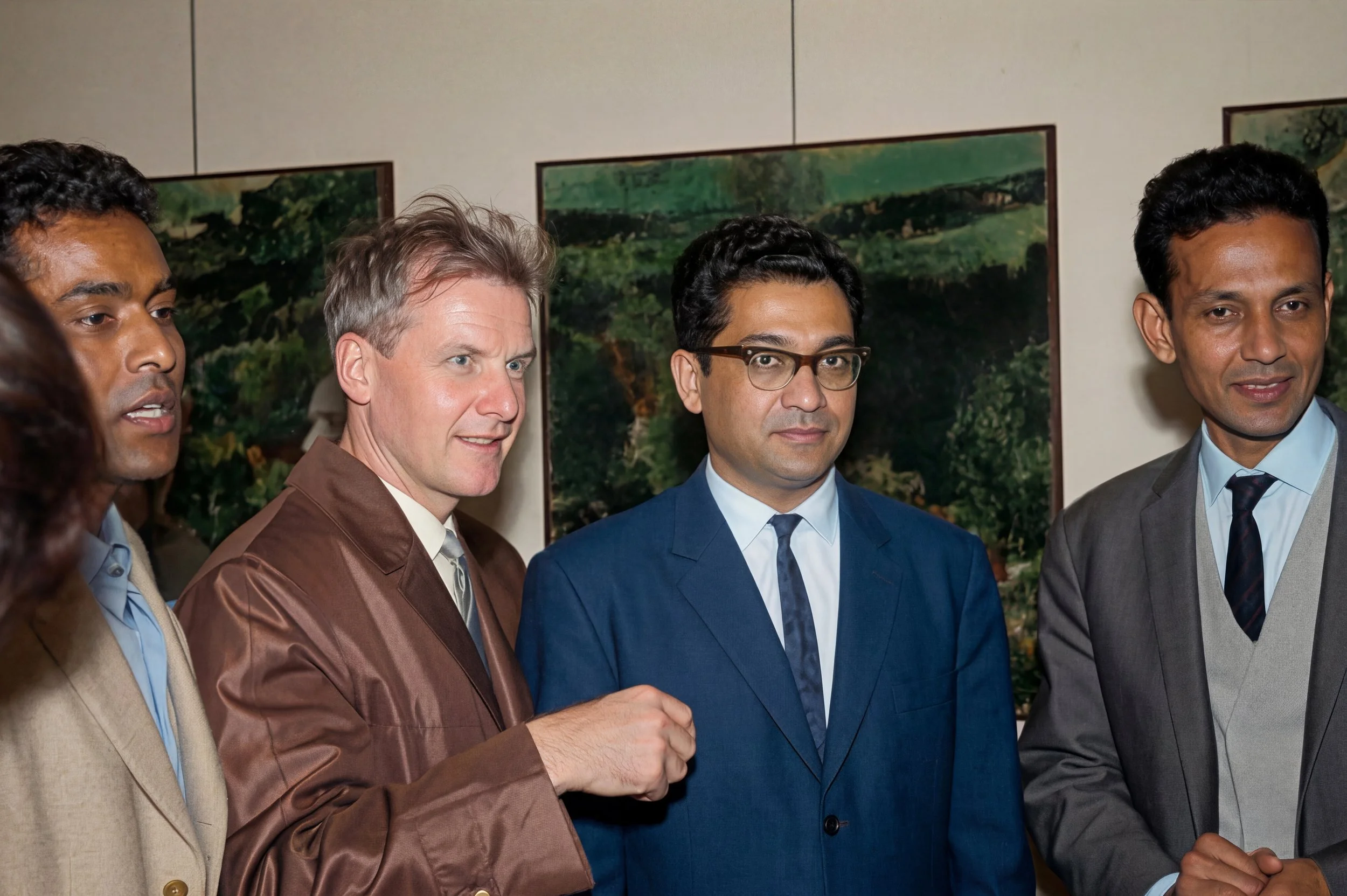
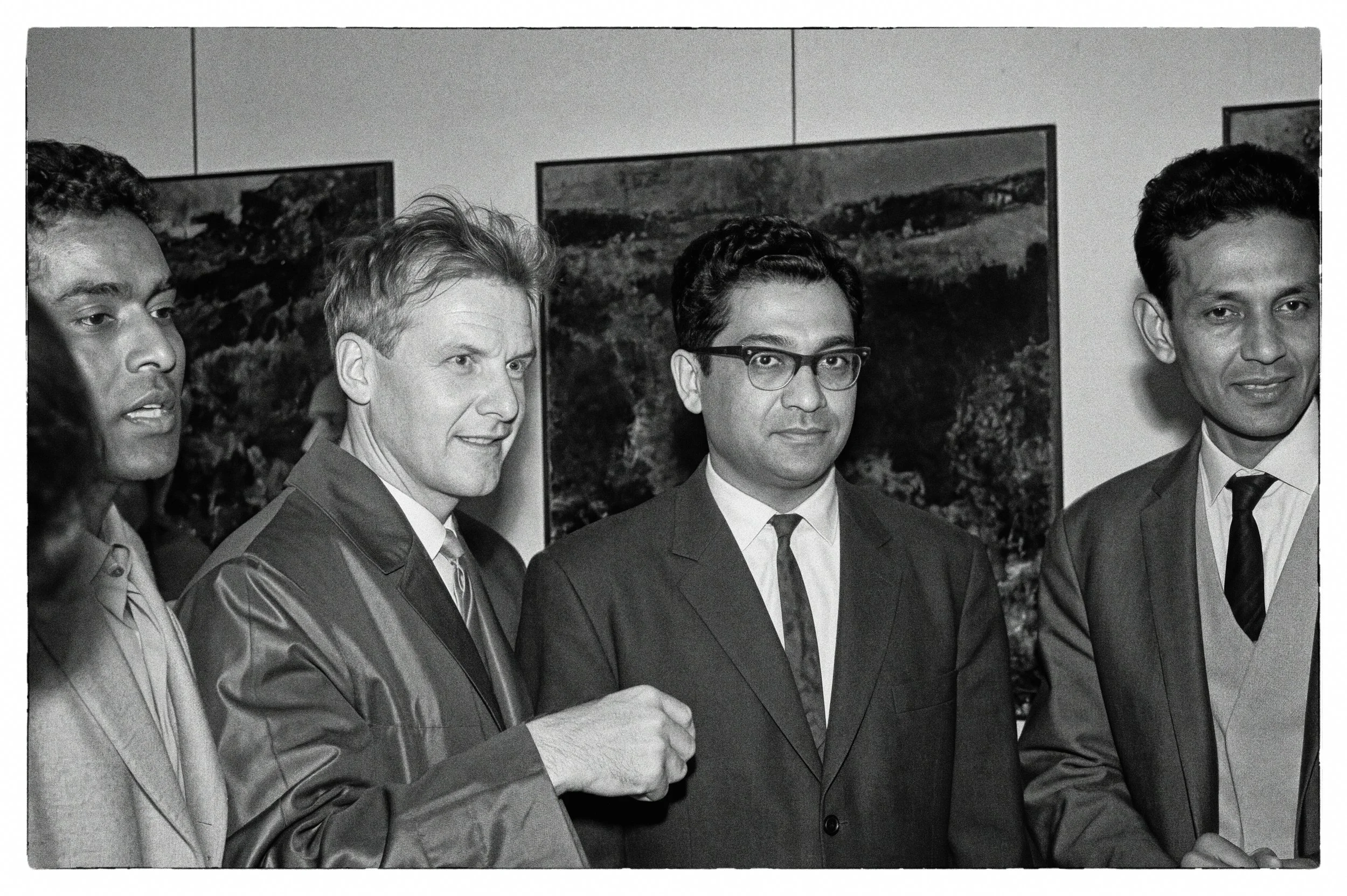
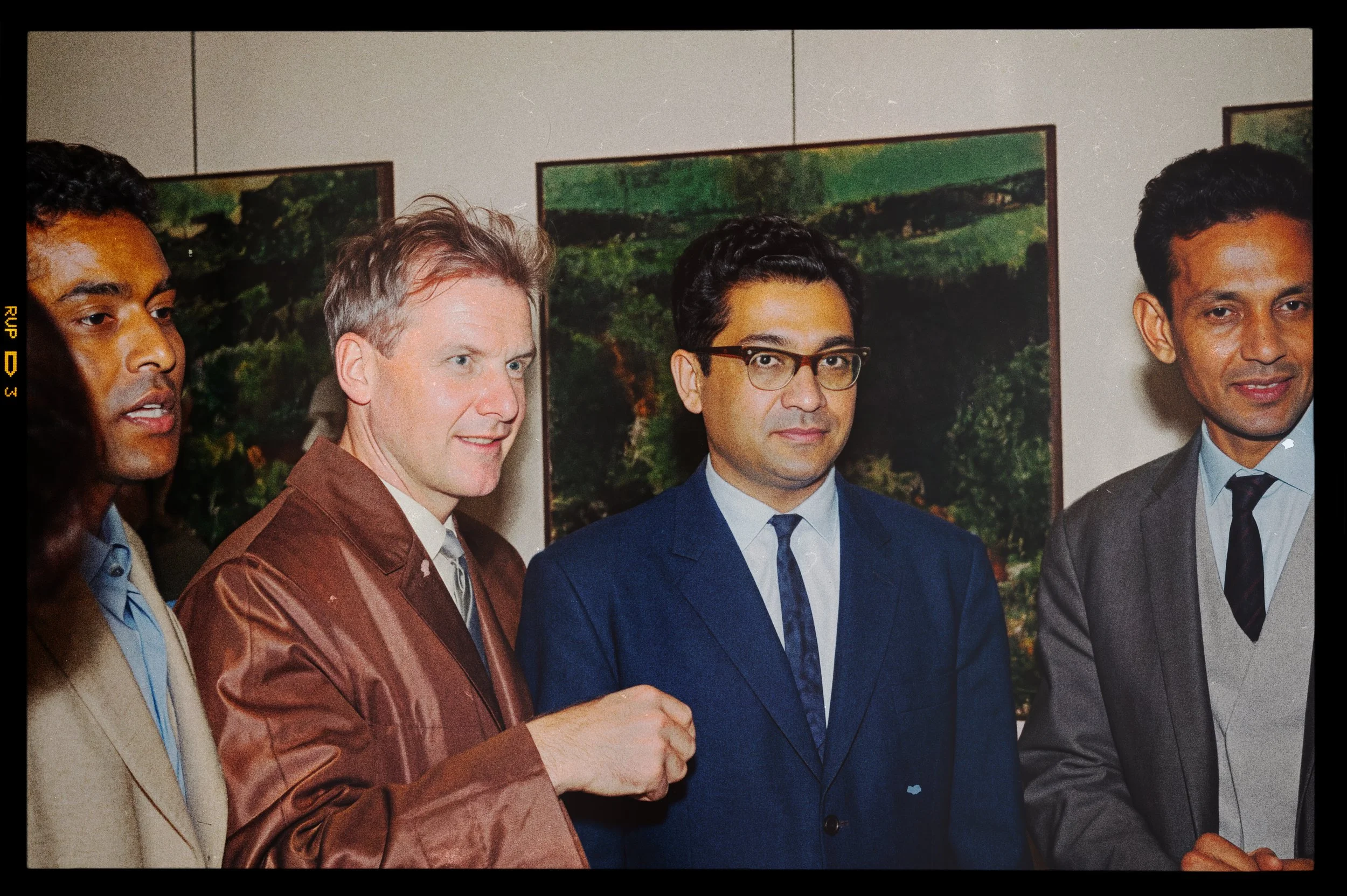
This case concerns a black-and-white studio portrait of Akbar Padamsee in Paris. The colours of the depicted paintings were recoverable through documentary and catalogue reference. Those verified colour relationships were reinjected while keeping the photograph structurally fixed.
The purpose was not simply to colourise the image, but to rebuild a stable visual reference from which historically coherent photographic outputs could be derived.
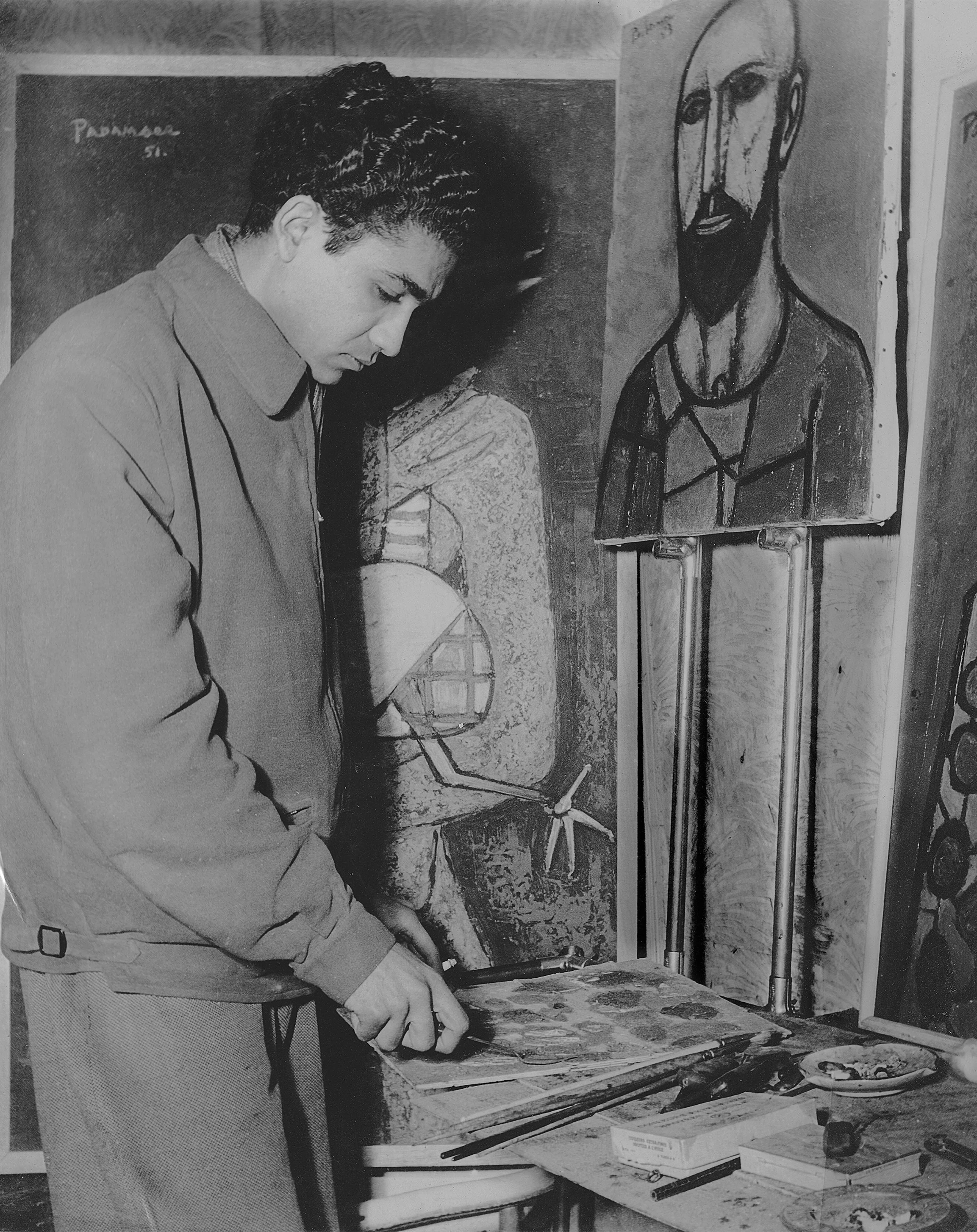
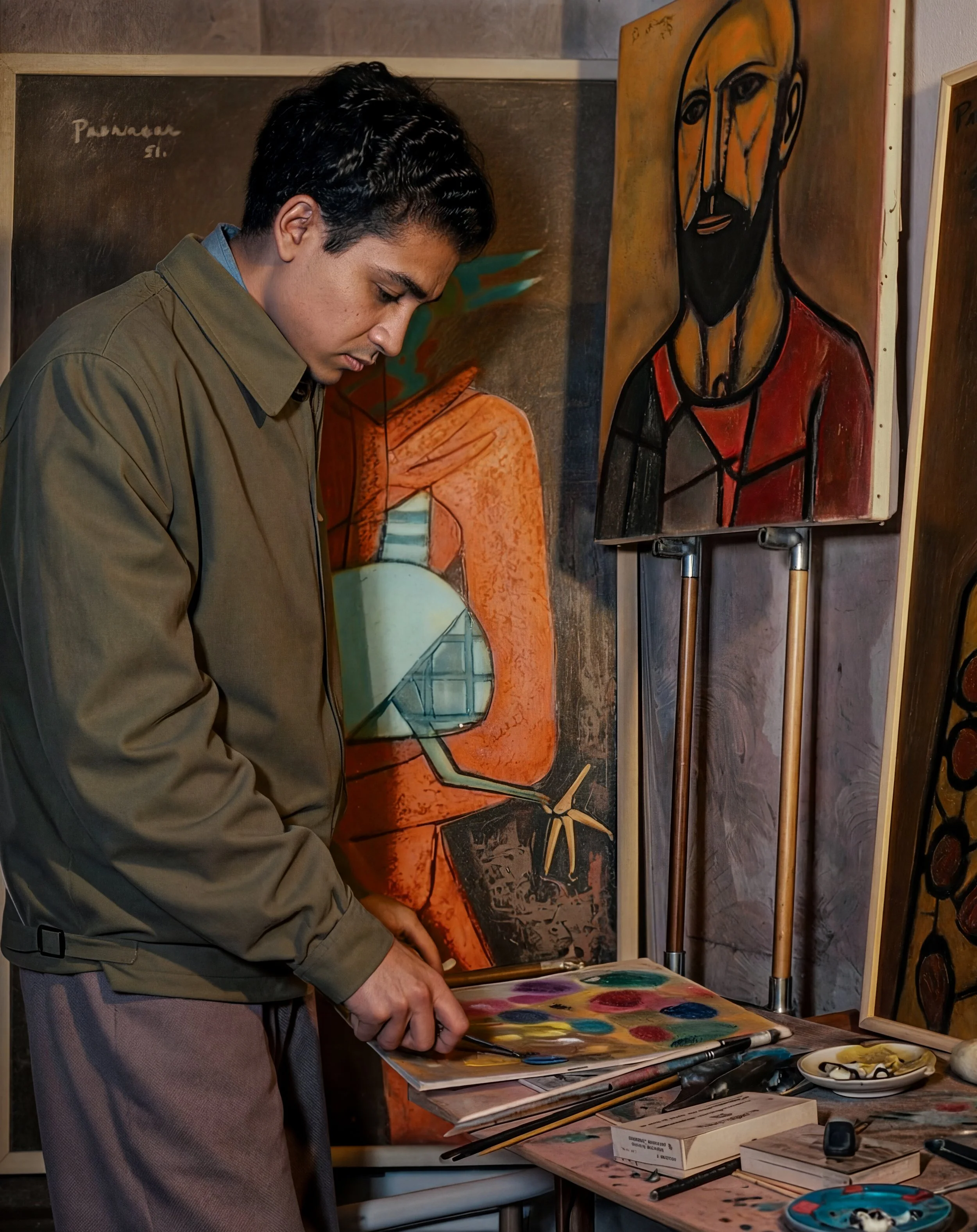
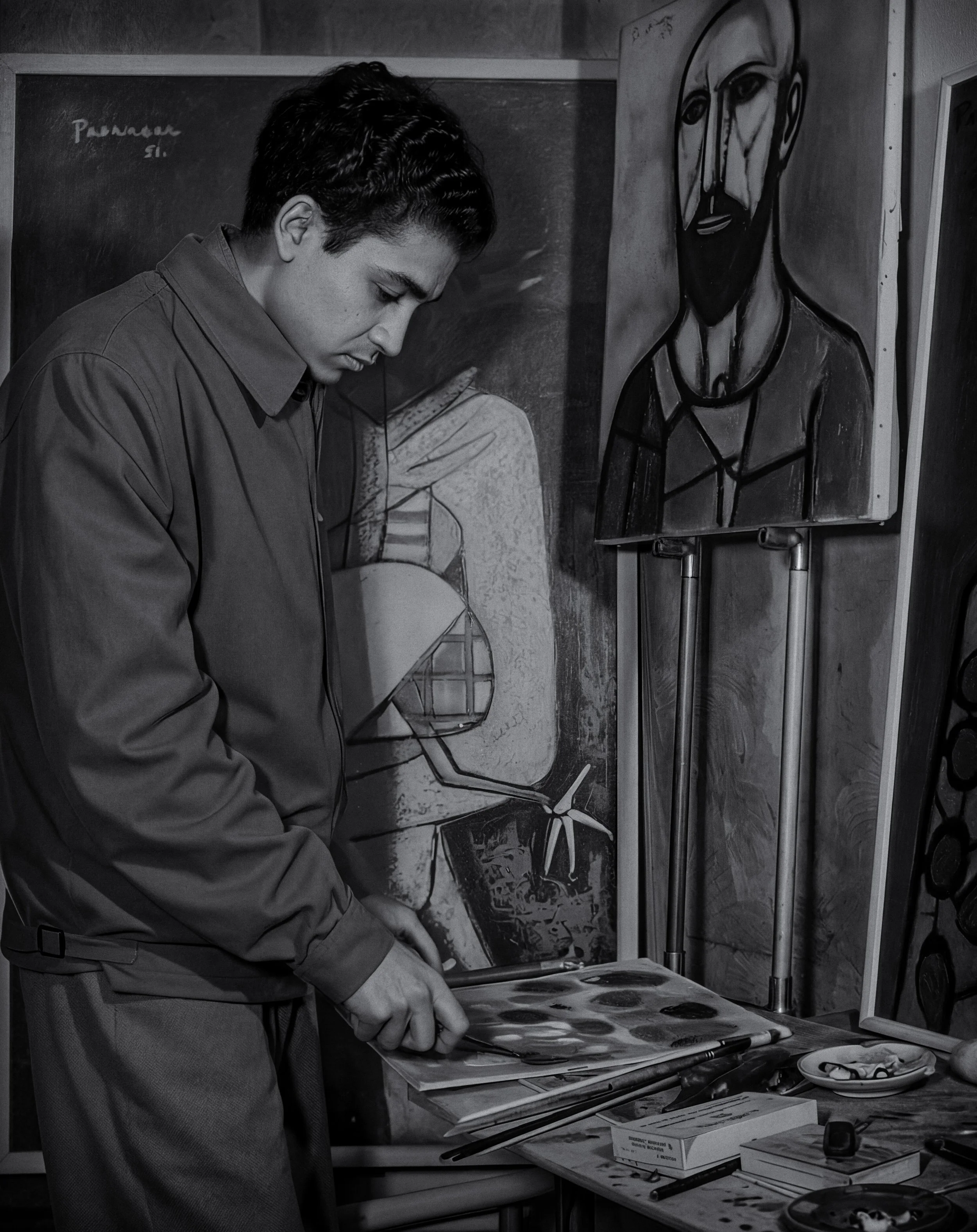
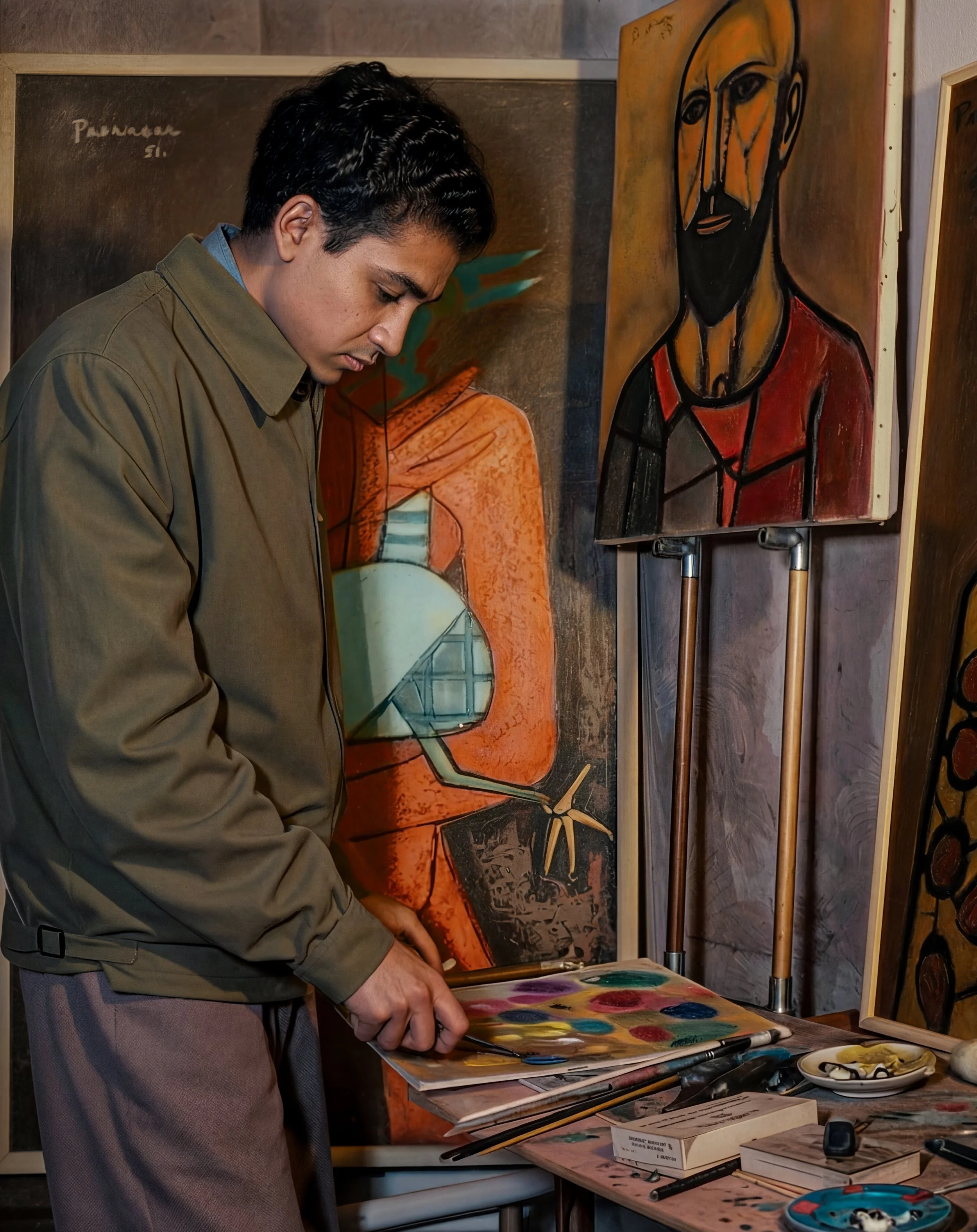
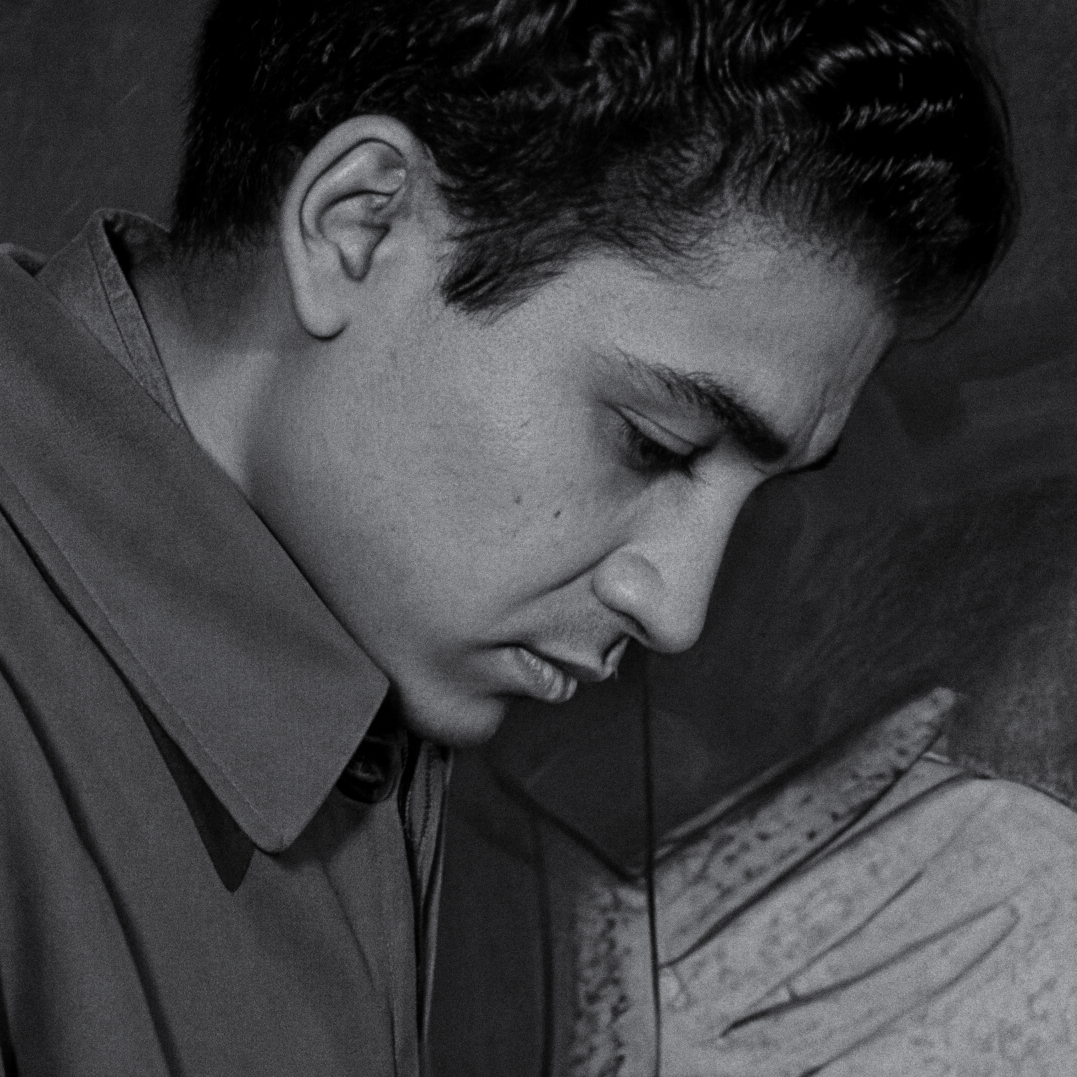
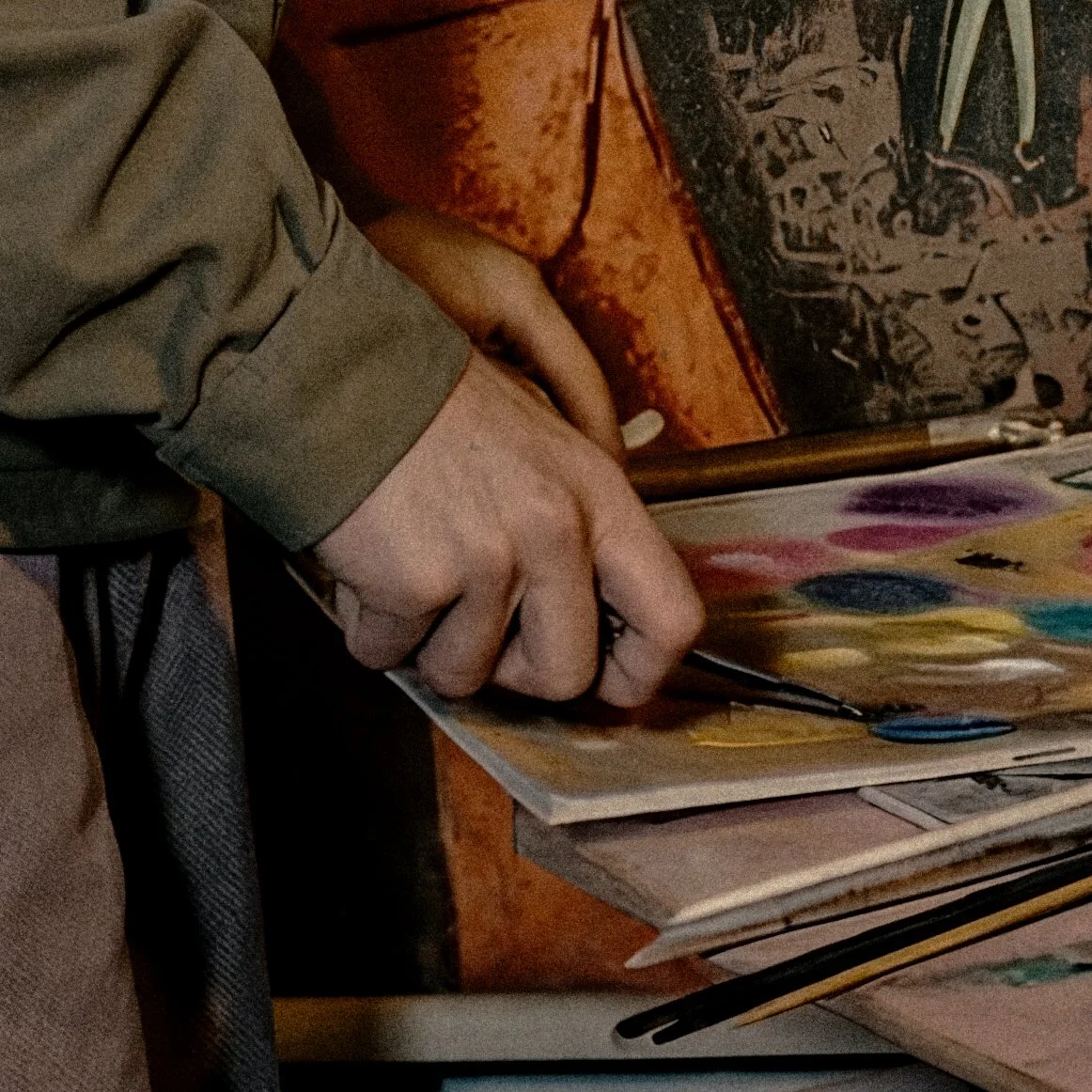
Comparison — Portrait output states
Once the visual reference is stabilised, the same image can be calibrated into different photographic output states. Each state belongs to a specific film, paper, process and archive logic.
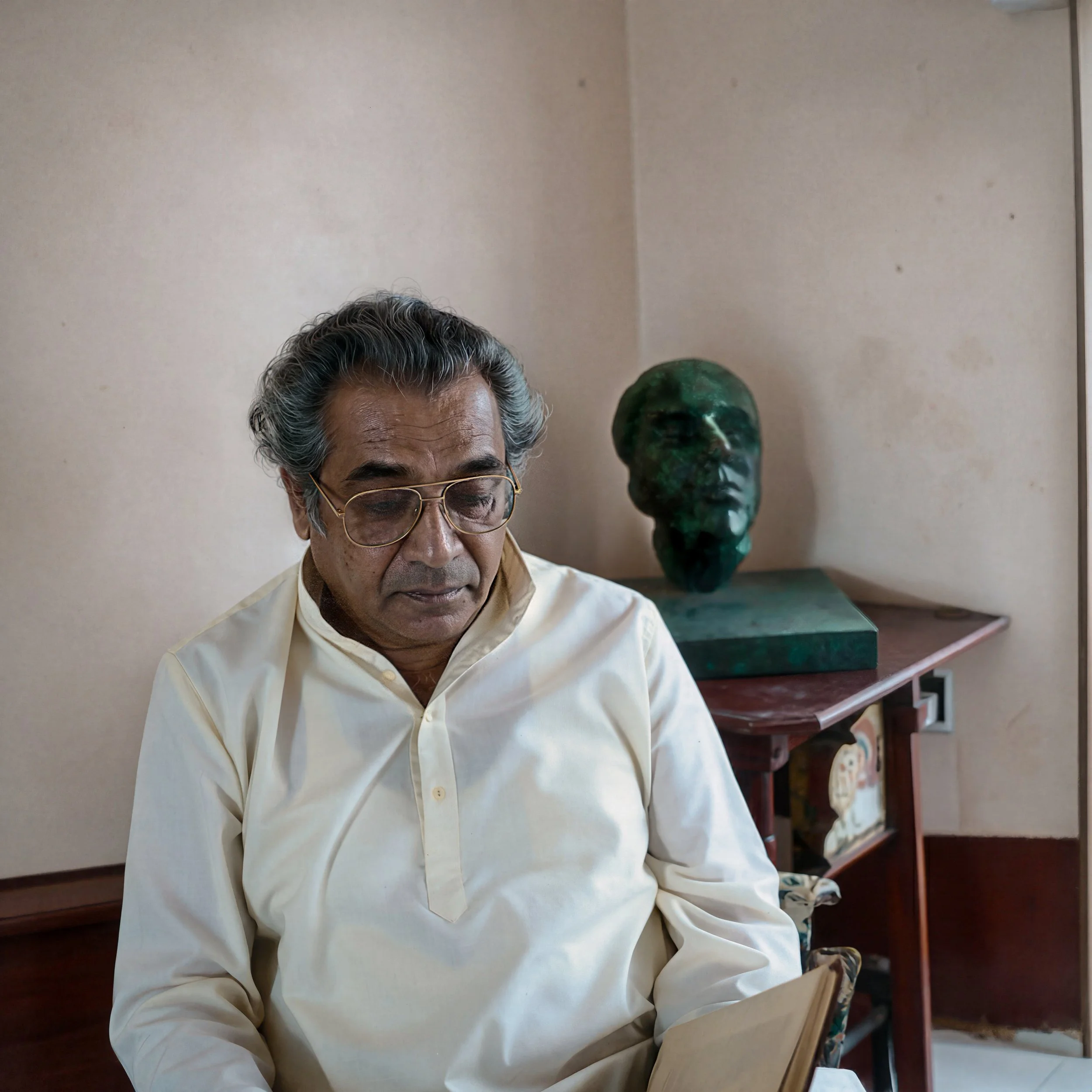
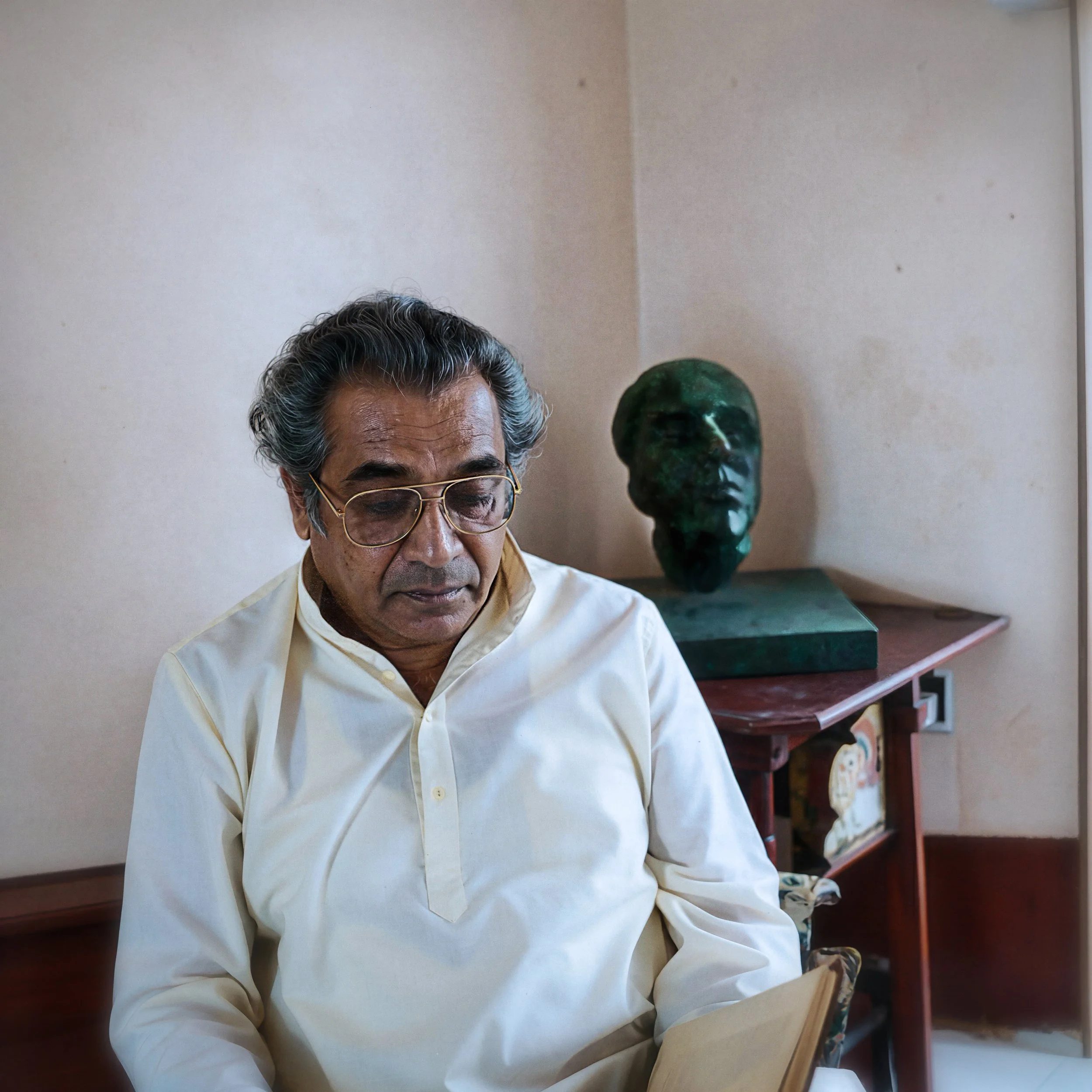
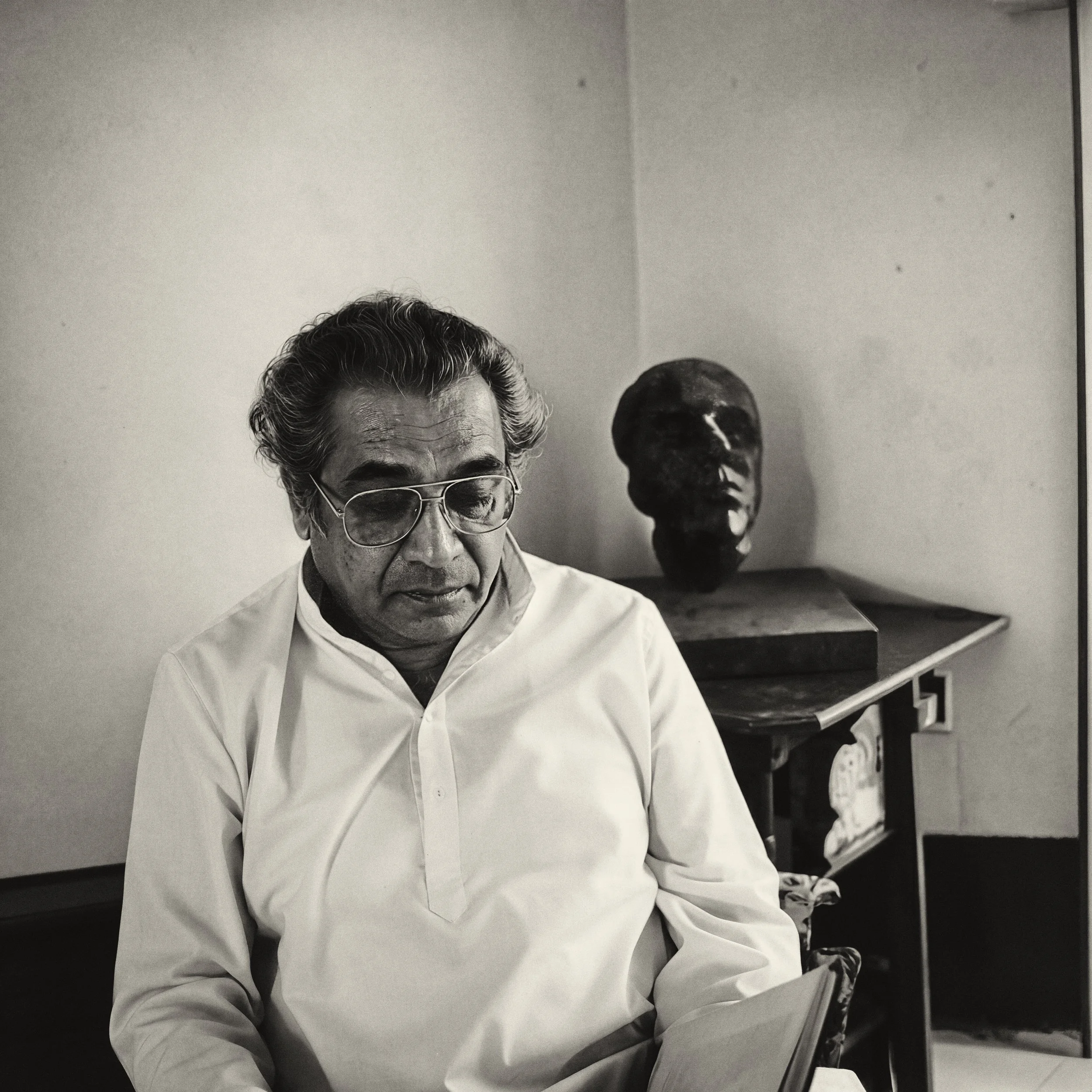
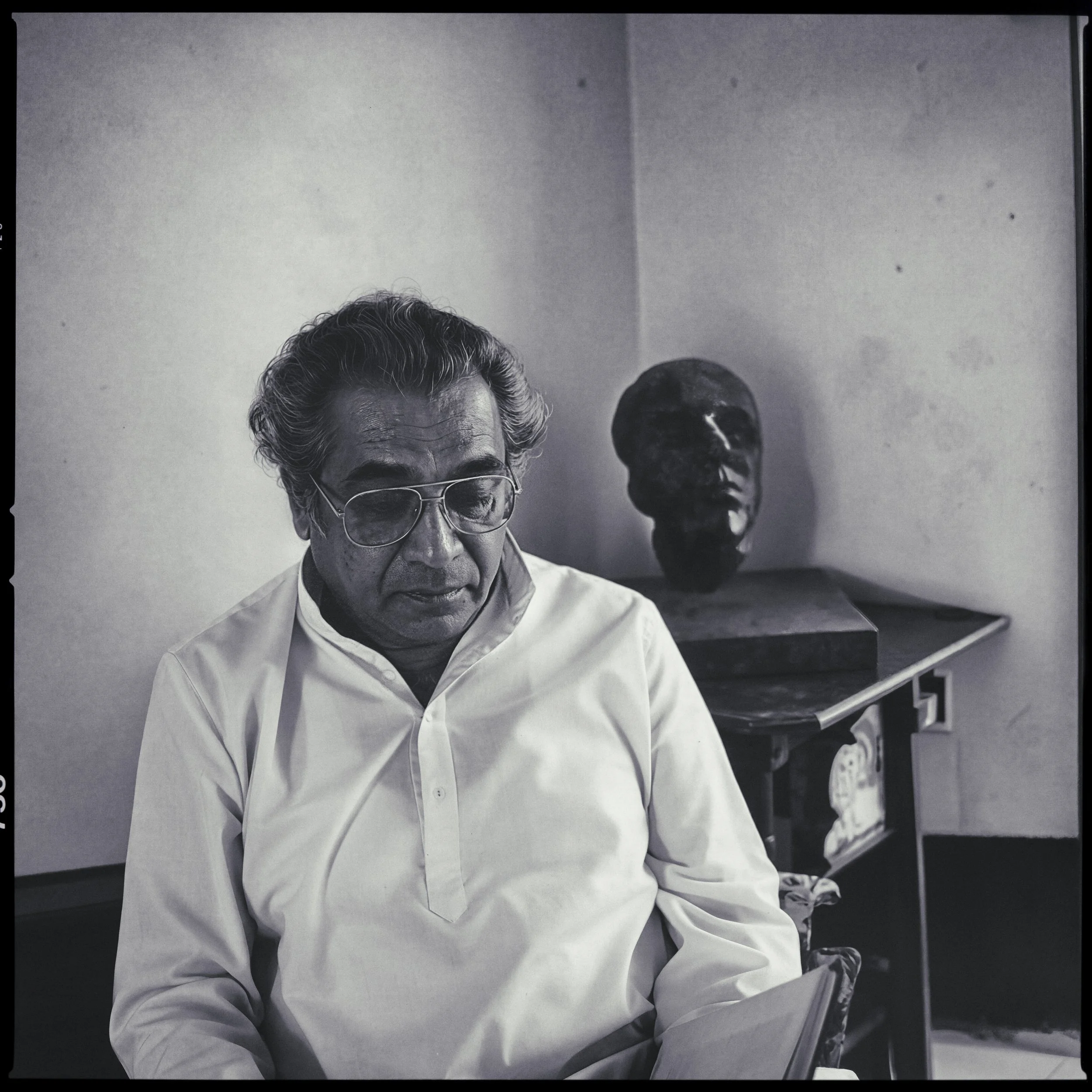
Case study 02
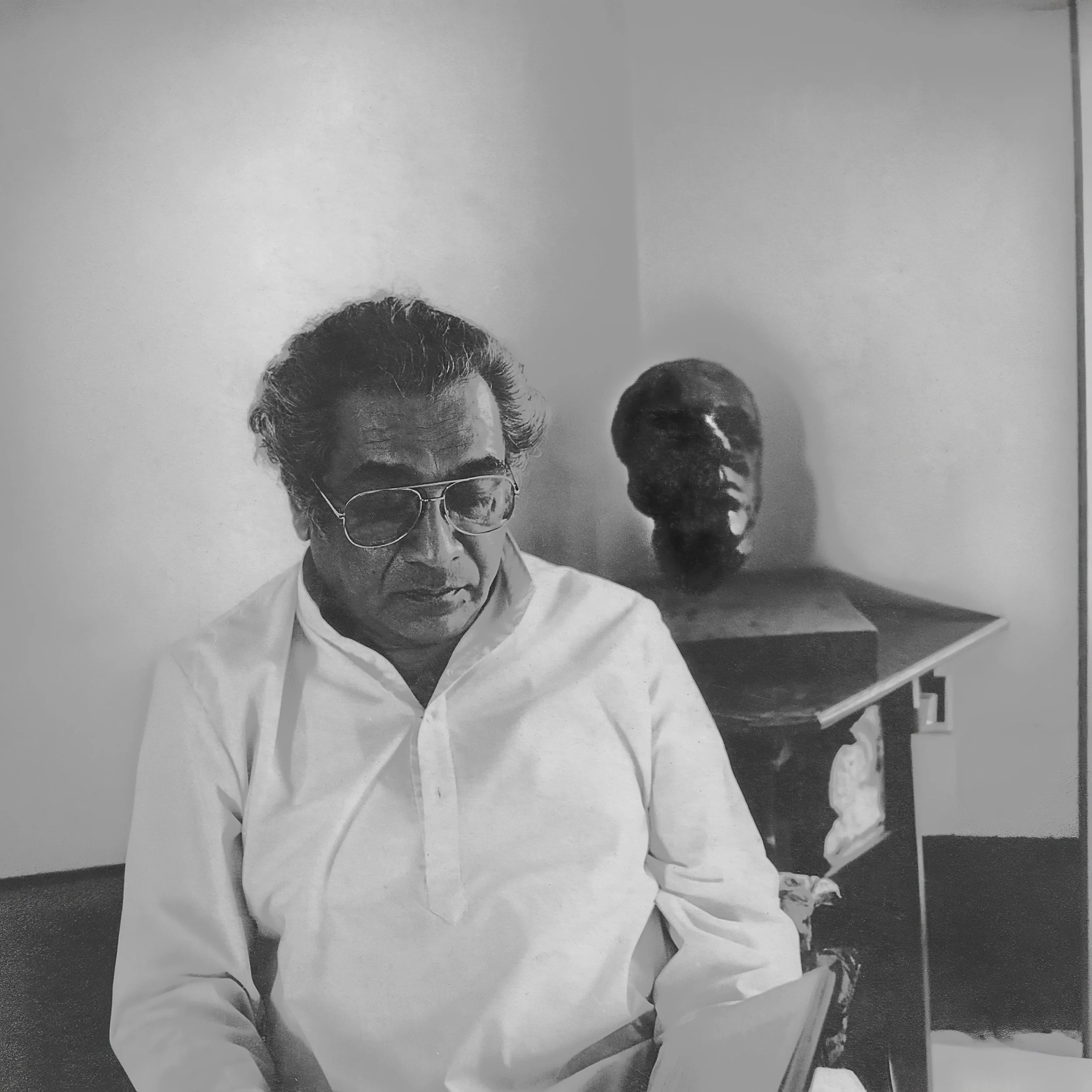
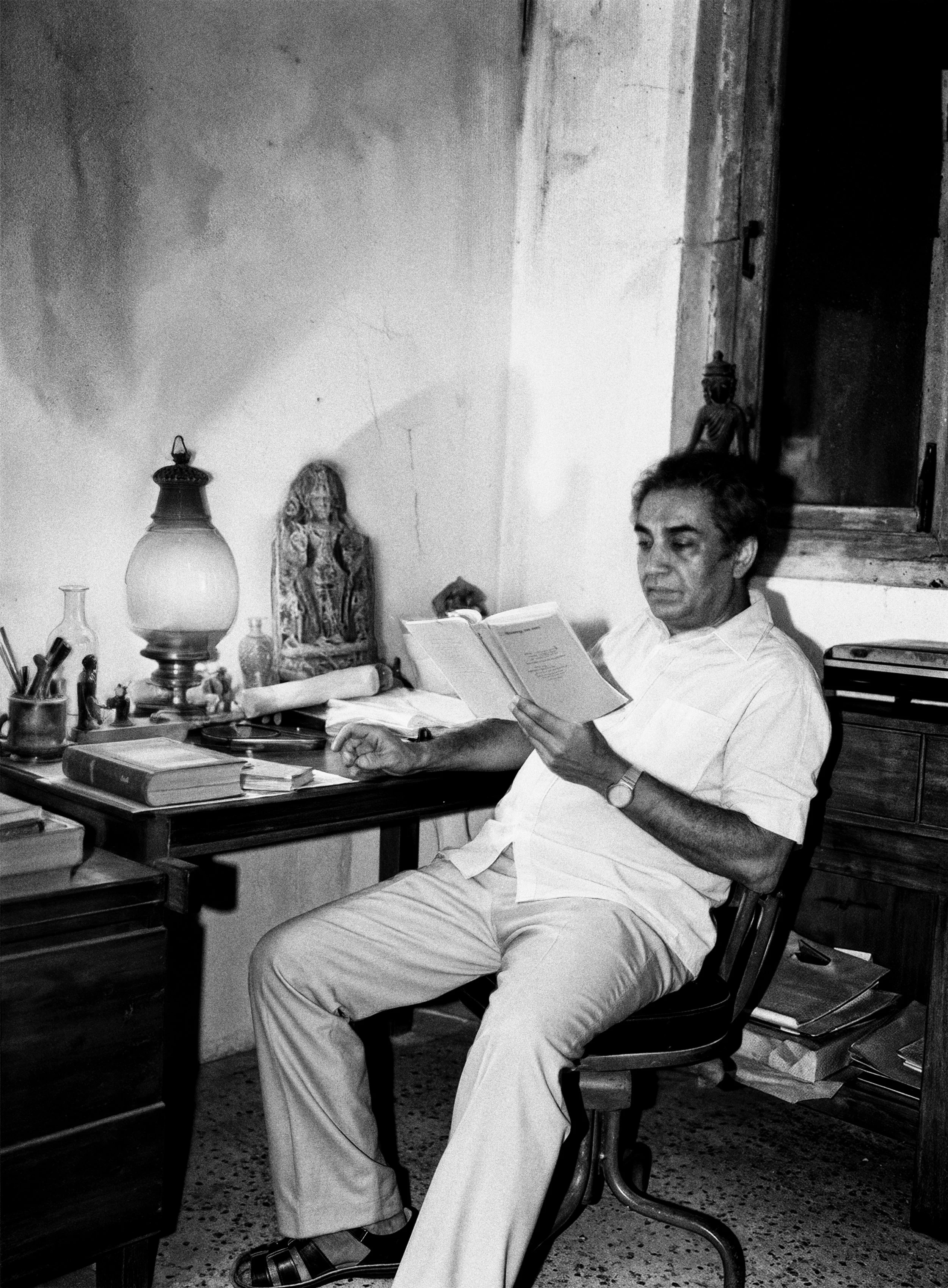
A severely degraded Polaroid from the archive had lost key visual information and could not be made readable from the print alone.
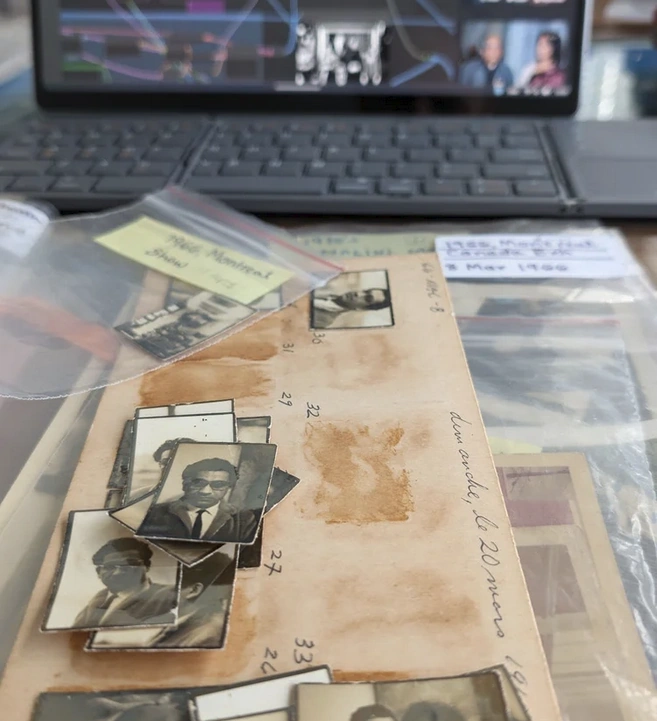
During documentary research, sequences from Akbar Padamsee and the Last Image made it possible to identify missing studio objects, including the lantern-style glass globe lamp and the standing figurative sculpture. Those references bounded the reconstruction and helped rebuild the lighting logic of the scene without changing composition or object placement.
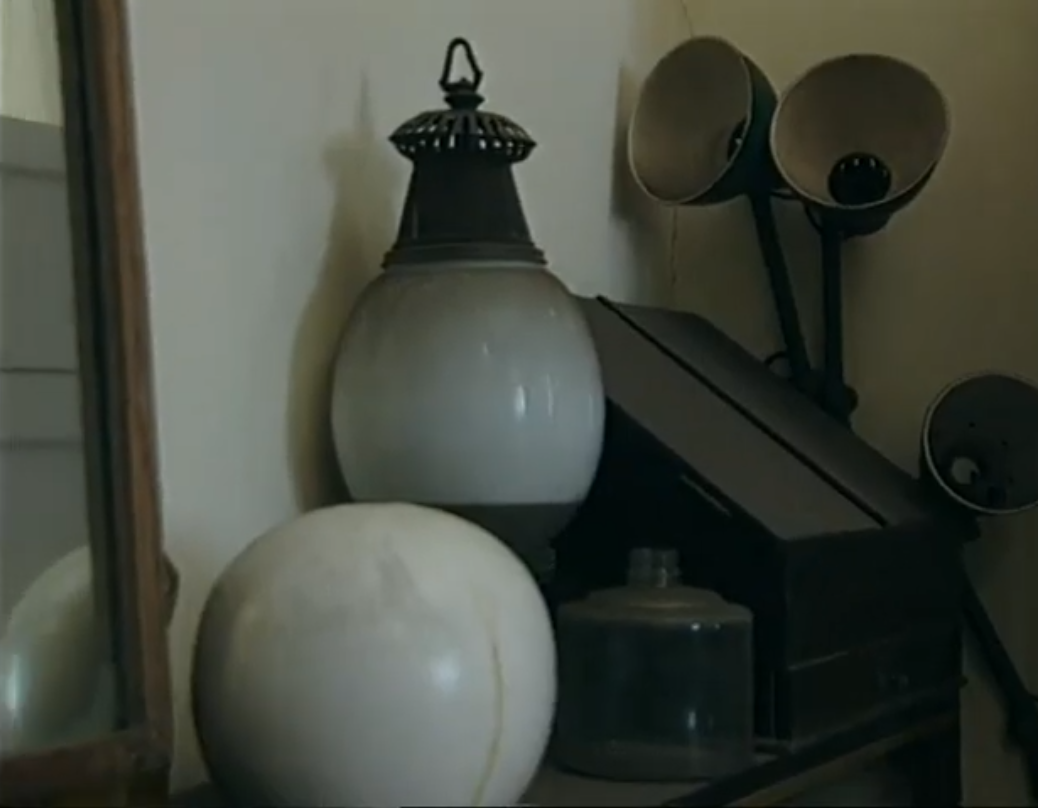
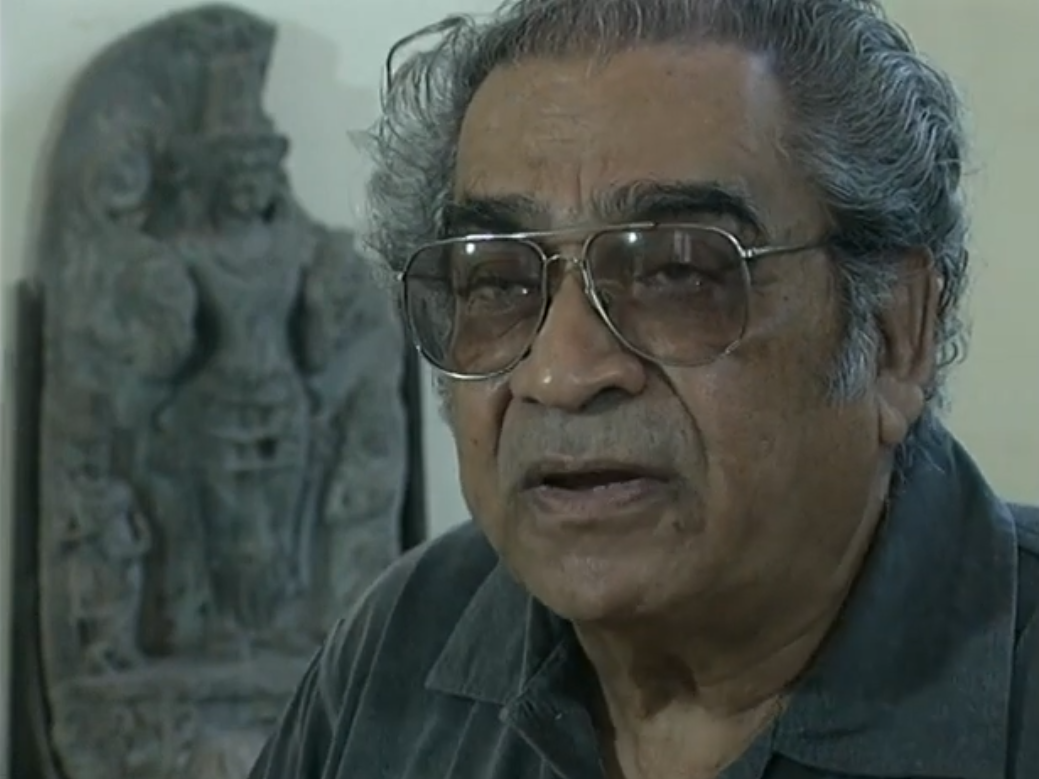
Comparison — Polaroid output states
The same recovered reference can be brought back into a Polaroid-coherent output state or translated into a different photographic language for archive or publication use.
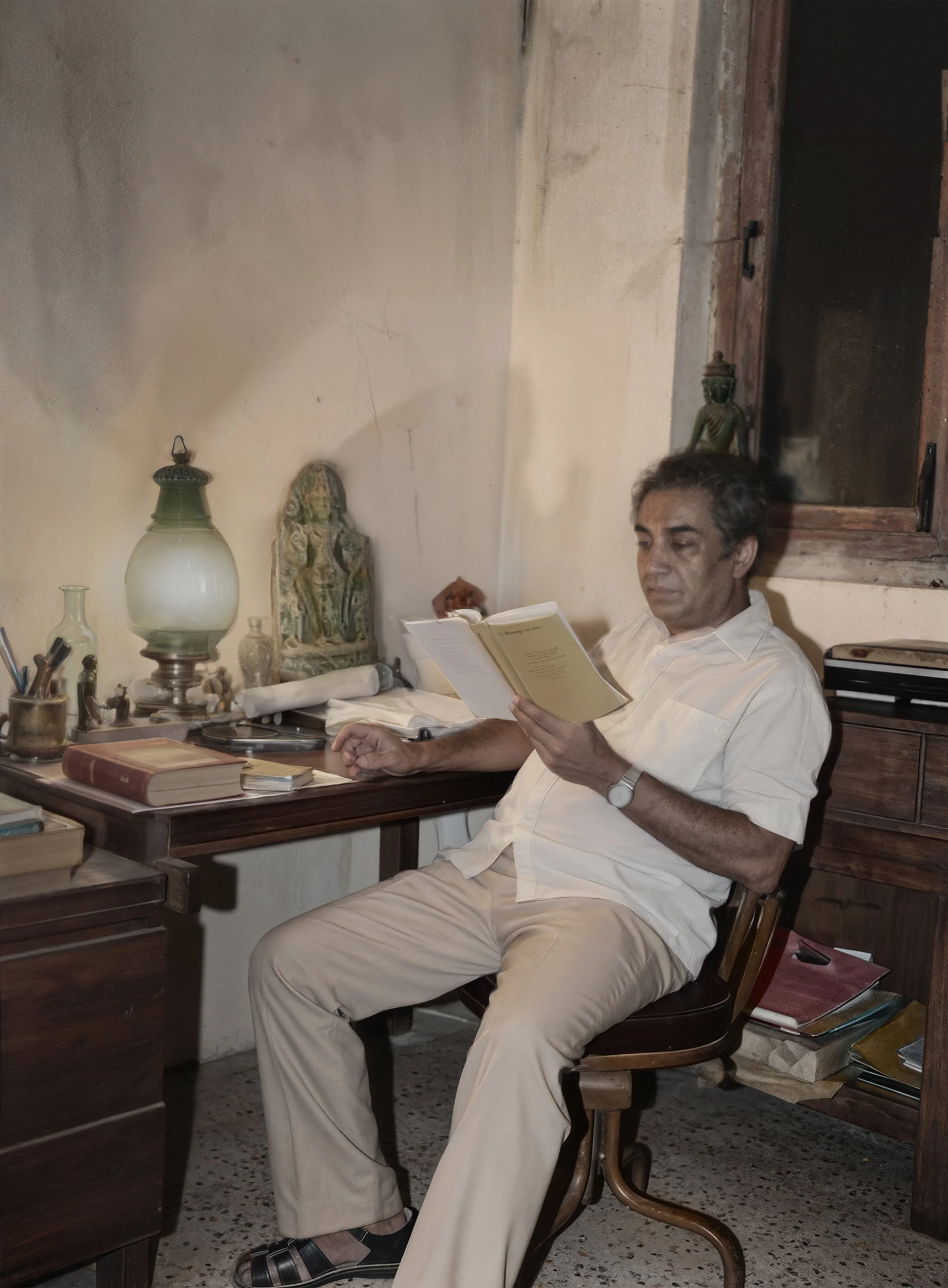
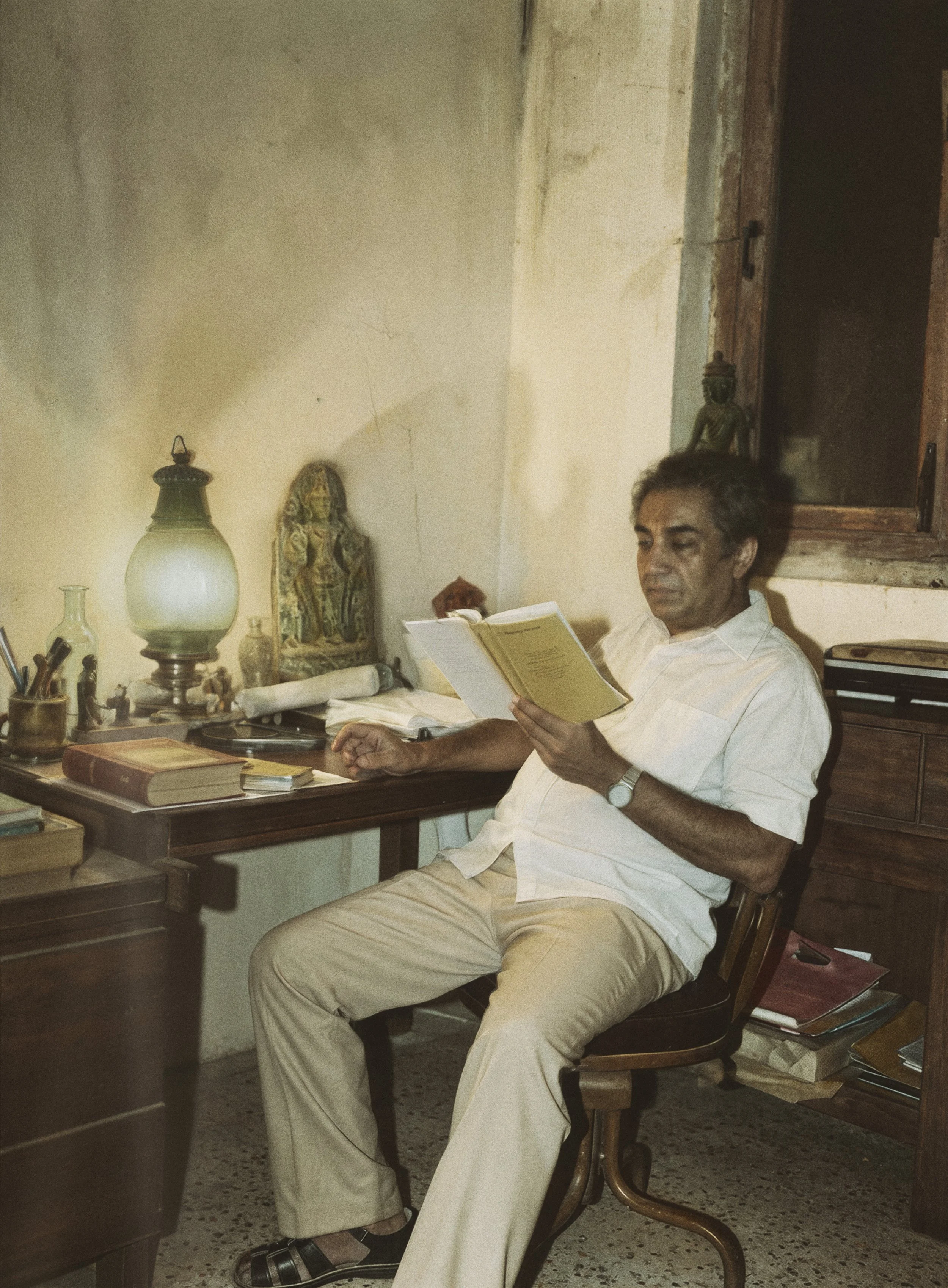
Output states
Once a stable reference image has been established, different output states can be prepared according to the photographic logic required by the archive, book or exhibition.
This may involve grain introduction, tonal compression, paper behaviour, film response, contrast shaping, colour gamut control and other period-sensitive calibrations. The goal is not maximum technical clarity at all costs, but photographic coherence.
An image may therefore move from a clean reconstructed reference toward a more granular, compressed or materially specific result when that makes it more faithful to the actual photographic history of the archive.
Style outputs happen downstream of the eidetic reference. The eidetic photograph remains the anchor. Film response, grain, contrast, toning, colour process, paper behaviour and print reproduction are treated as governed photographic decisions, not separate reinterpretations of the image.
Reconstruction pipeline
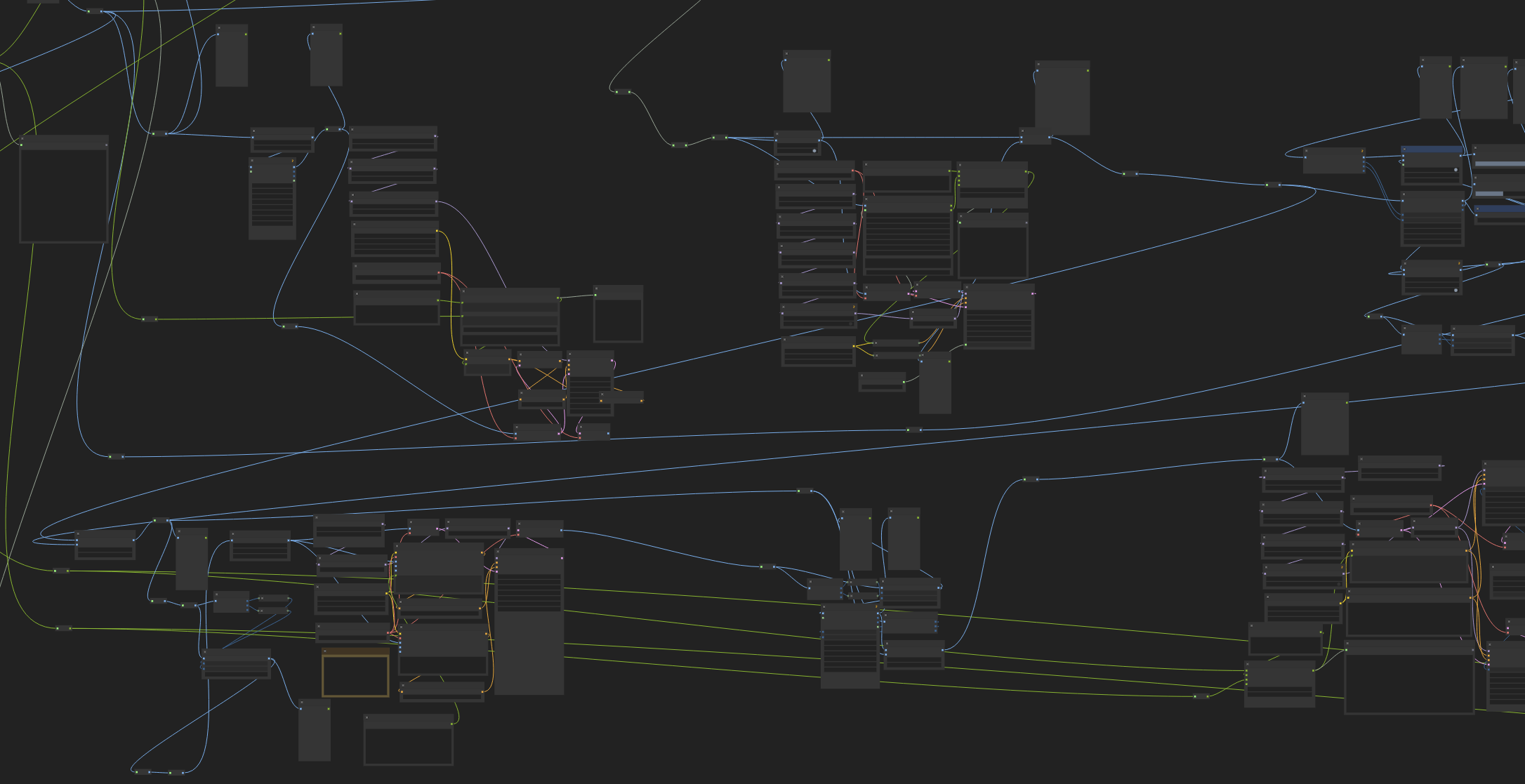
The workflow is model-agnostic. It is built around constraints, configuration, review stages and photographic judgement rather than dependence on a single AI model.
ComfyUI is used to structure repeatable node-based processes, combining image repair, masked generation, colour control, upscaling, manual correction and photographic finishing.
The technical pipeline matters because it keeps the reconstruction governable. Each stage can be adjusted, rejected, repeated or constrained before the image moves forward.
Documentation
For institutional work, the output can be accompanied by documentation that records the source material, evidence used, reconstruction boundaries, inferred areas, photographic output choices and unresolved uncertainties. This can support archive records, curatorial decisions, publication notes or exhibition use.
Applications
The work is not limited to one-off restorations. The same logic can be extended into reconstruction systems and tailored applications that fit the workflow of an institution.
We can help build controlled image-reconstruction workflows for archives, estates, museums, foundations and publishers, whether as a studio-led process or as a more integrated operational setup.
Potential uses extend across museums and cultural institutions, artist estates and foundations, archives and research collections, publishers and catalogue teams, galleries and curators, and family collections and private estates.